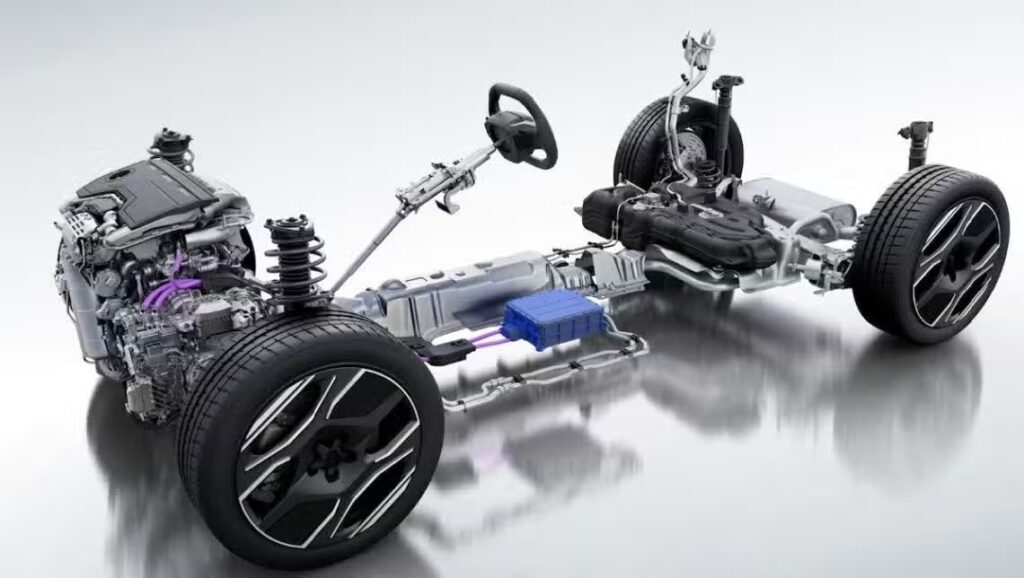

Stellantis is developing a new version of its 48-volt mild-hybrid system that uses a bigger usable battery to increase electric assistance during driving. Early prototypes, based on the Peugeot 208 and 308, have been seen testing in Southern Europe, showing that the company is working on improving this hybrid setup.
Bigger Usable Battery for More Electric Help
The key update appears to be doubling the usable capacity of the battery from about 0.43 kWh to roughly 0.9 kWh. While the total battery capacity is similar to current designs (around 0.89 kWh), the upgrade means more of this energy would be available for driving instead of being kept in reserve.
This change would allow the electric motor to assist the engine for longer periods, particularly in stop-and-go city traffic where the car can recover energy while braking. Essentially, the system could rely more on electric power before needing to recharge the battery.
Current System and What Remains Unconfirmed
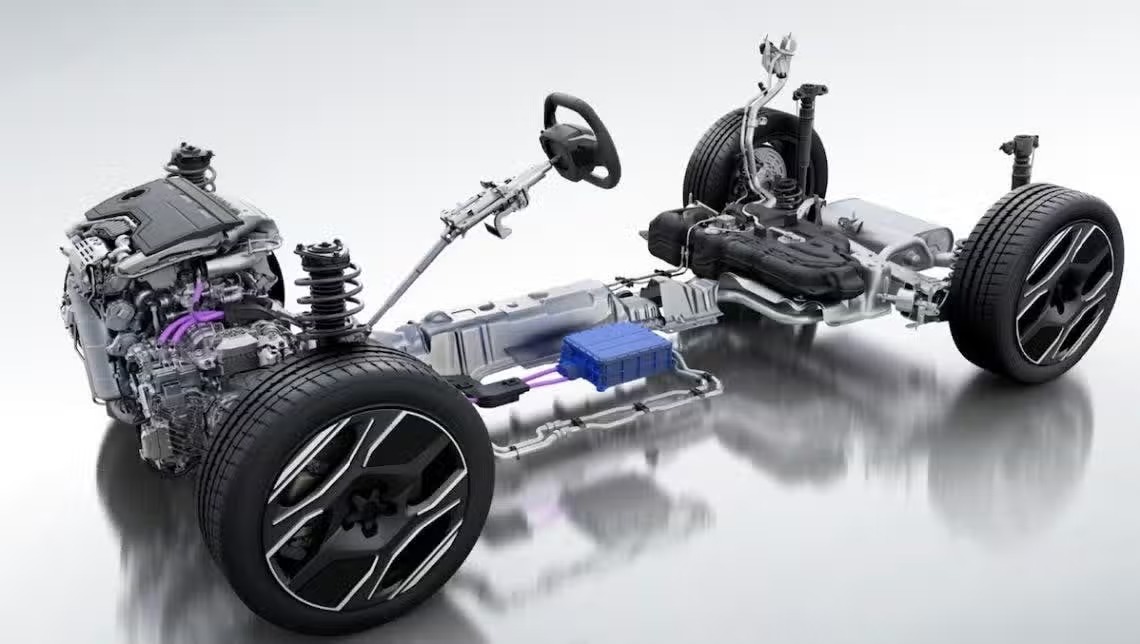
Today’s mild-hybrid system places a 21 kW (about 28 hp) electric motor inside the six-speed dual-clutch automatic transmission. It can move the car on electric power alone for short distances and supports the gasoline engine during acceleration to reduce fuel use.
However, the new battery upgrade does not indicate a move toward a plug-in hybrid. It is an evolution of the 48-volt system aiming mainly for longer electric support, without changing how the car fundamentally runs. Stellantis has not yet shared details on how much fuel savings or electric-only driving time will improve.
Future Availability and Models
The Peugeot prototypes look much like their production counterparts, which suggests that the main differences are mechanical rather than cosmetic. Beyond Peugeot, the enhanced system may be introduced to other Stellantis brands using this technology, including Fiat and Alfa Romeo.
At this stage, it is not clear which models will get this upgrade first or if the electric motor’s power will rise. Pricing and exact rollout plans across Europe depend on each model’s update schedule.
Source: clubalfa.it