
Hyundai is preparing a new range of more affordable performance cars set to launch in 2030. These models will sit between its current high-performance N cars and the entry-level sporty N Line trims.
Performance Models with Shared Technology
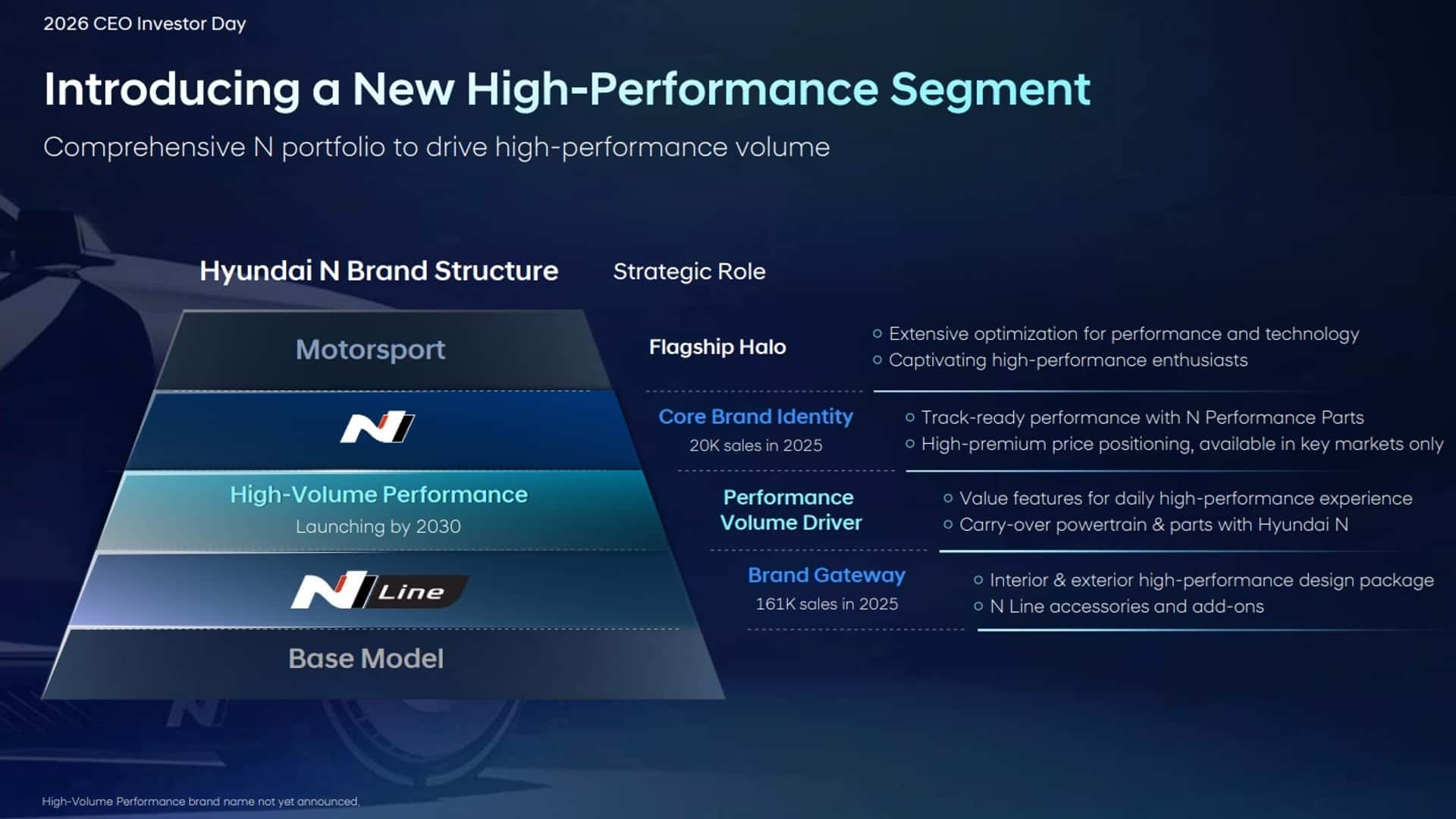
During Hyundai’s CEO Investor Day, the company revealed plans for a “high-volume performance” lineup. These new models will borrow powertrains and hardware from the existing N cars, though it’s not clear if this includes combustion engines, electric motors, or both. This suggests Hyundai may offer a mix of ICE and electric performance vehicles in this new series.
The new lineup will have a separate brand name or suffix to distinguish it, following examples set by German automakers. Audi uses S, BMW has M Performance, and Mercedes offers lower-tier AMG models. Hyundai has yet to announce the exact branding details.
Where the New Lineup Fits in Hyundai’s Models
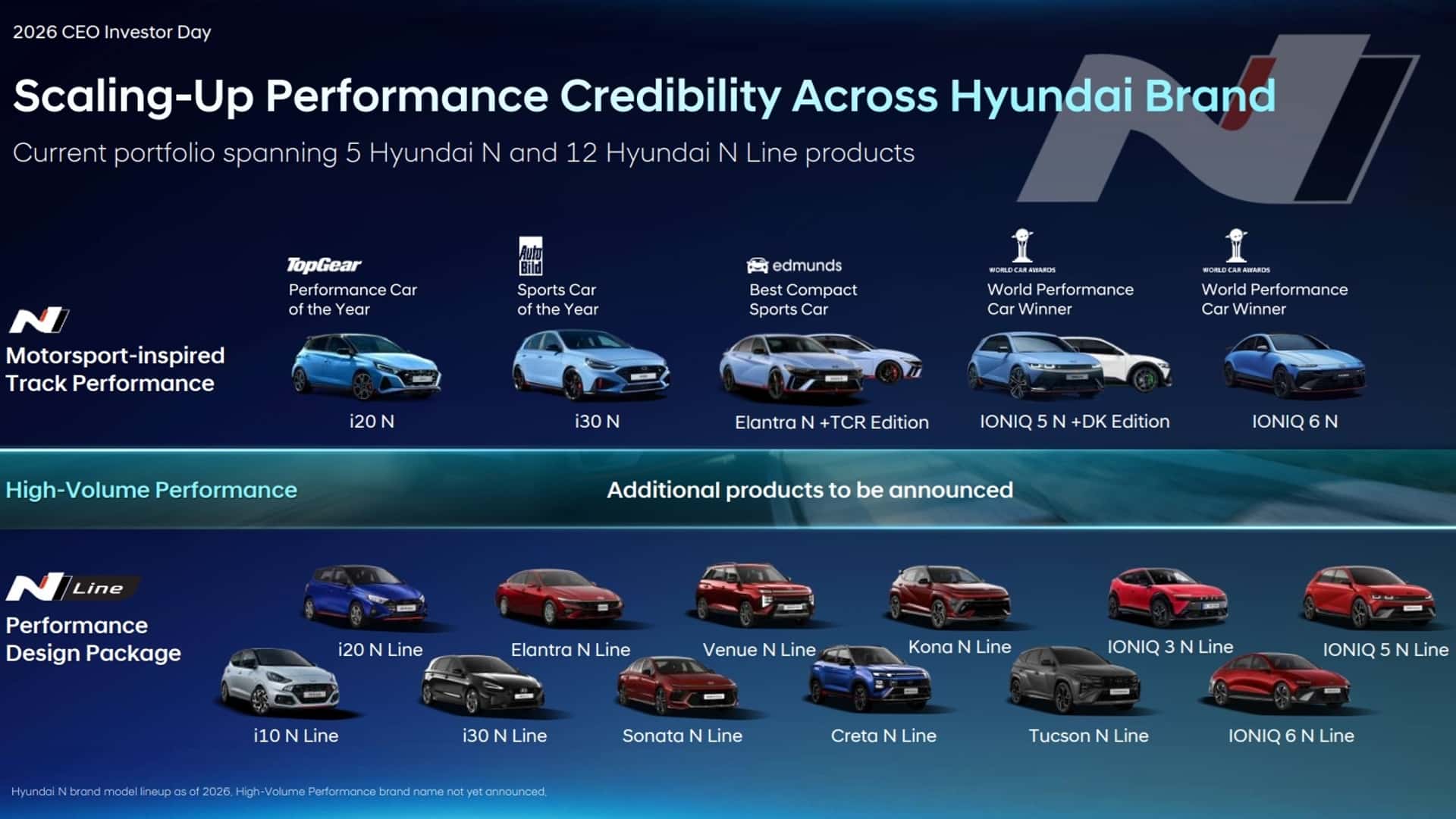
Currently, Hyundai sells five N models—which include the i20 N, i30 N, Elantra N, Ioniq 5 N, and Ioniq 6 N—that focus on strong performance and have combined sales of about 20,000 units in 2025. The company expects to add an N version of the 2027 Elantra, likely with a larger engine.
On the other end, Hyundai offers over a dozen N Line trims. These provide sporty styling but no major performance upgrades and sold around 161,000 units last year. The new performance range will fill the gap between these two levels, giving buyers better driving ability than an N Line but at a lower price and with less extreme setup than full N cars.
What to Expect by 2030
The first model in this mid-range performance family should arrive around 2030. Hyundai aims for these cars to be more affordable and focused on everyday driving rather than track use, making performance accessible to a wider audience.
This strategy recognizes that not all buyers want the full power and cost of an N model but want more than just cosmetic changes of an N Line. Moving forward, it will be interesting to see if Hyundai maintains gasoline engines in these cars as the decade progresses and if the lineup includes EV options.
Source: motor1.com