
Hyundai is preparing a new range of performance cars that will fit between its high-performance N models and the entry-level N Line trims. This lineup aims to offer more affordable but still sporty options for enthusiasts, starting from 2030.
New “High-Volume Performance” Range Coming
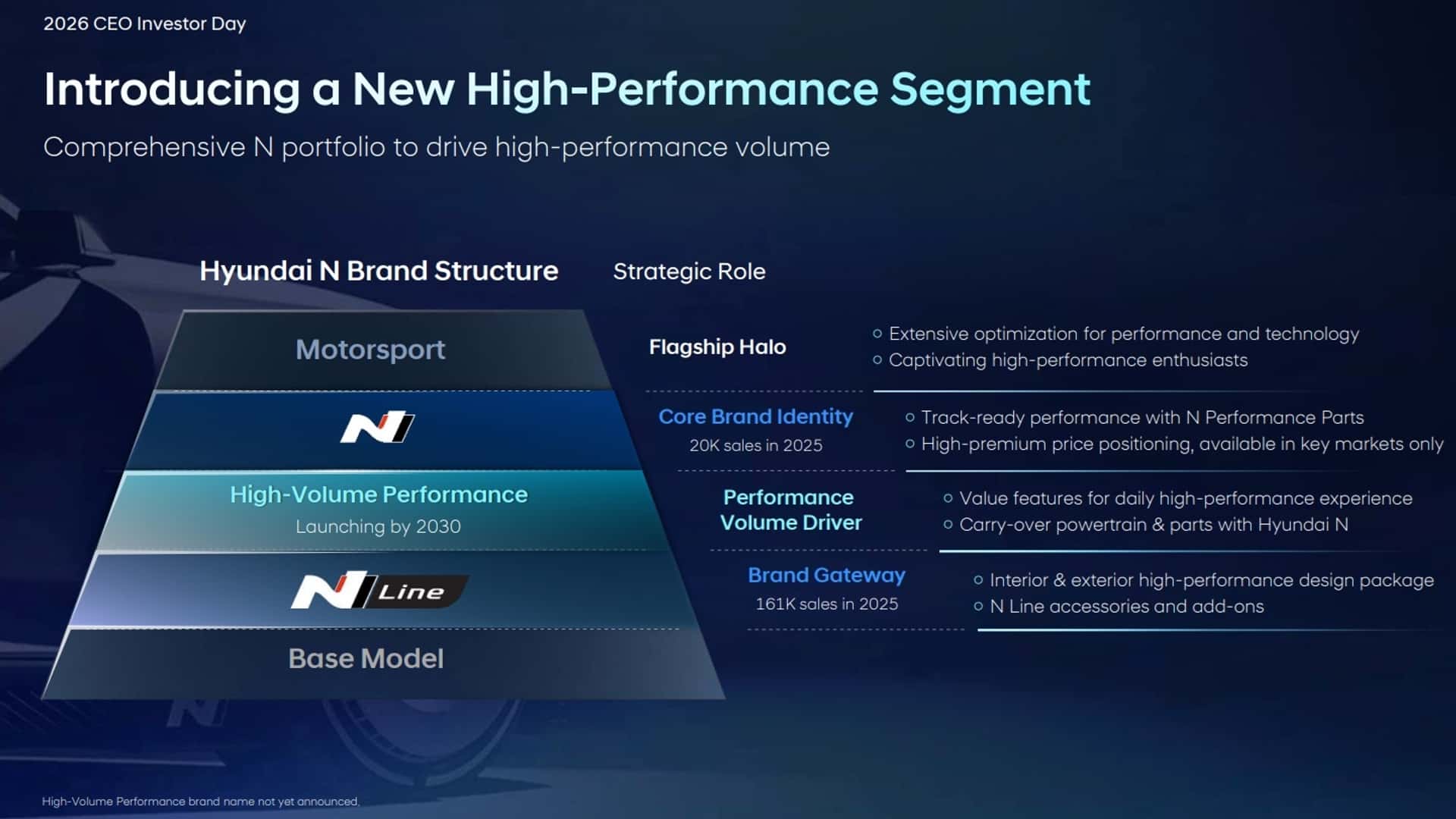
During Hyundai’s recent CEO Investor Day, the company revealed plans for a new “high-volume performance” series. These cars will borrow powertrains and hardware from the existing N models, though Hyundai hasn’t clarified whether that includes combustion engines, electric motors, or both. It suggests the lineup could feature a mix of internal combustion engine and electric vehicles.
The new performance cars will have their own brand name, which Hyundai has not yet shared. It might use a suffix attached to the existing “N” badge to clearly set these models apart, similar to how German luxury brands differentiate their sportier versions. For example, Audi uses “S,” BMW has “M Performance,” and Mercedes offers lower-tier AMG models.
Where These Models Fit in Hyundai’s Lineup
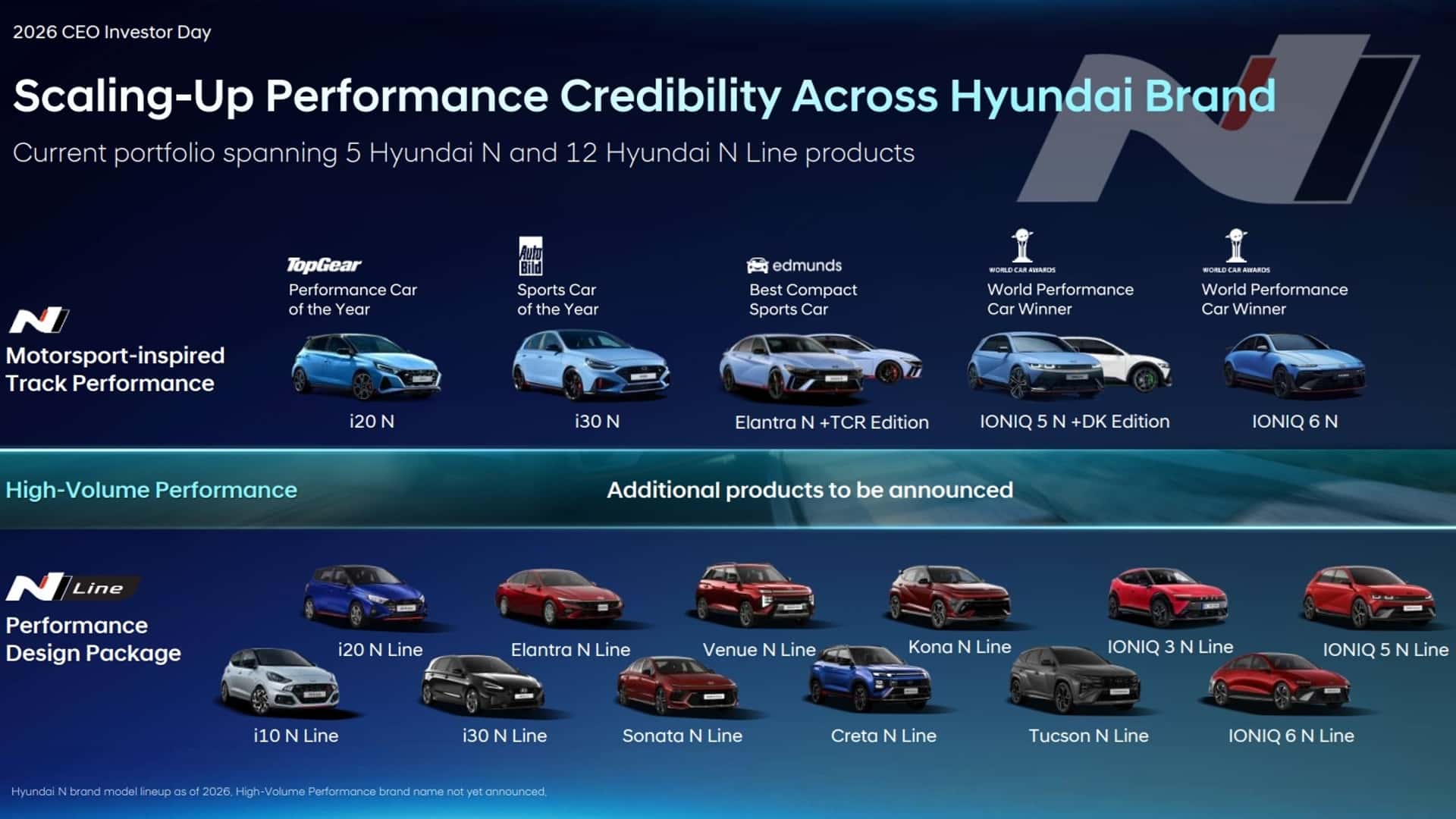
Currently, Hyundai offers five full N models: the i20 N, i30 N, Elantra N, Ioniq 5 N, and Ioniq 6 N. These models sold around 20,000 units in 2025. The upcoming 2027 Elantra is expected to join the lineup with updated N performance, possibly including a larger engine.
On the opposite end, there are around a dozen N Line variants, which mainly add sportier looks without real performance upgrades. These had combined sales of 161,000 units last year and are akin to Audi’s S Line or BMW’s M Sport packages.
The new range will bridge the gap between the full N models and the N Line trims. It is expected to deliver more performance than N Line but at a noticeably lower price than the true N cars. The focus will likely remain on making these cars suitable for everyday driving rather than track use.
Looking Ahead to 2030 and Beyond
The first model of this new performance series will arrive in 2030, giving Hyundai plenty of time to develop distinct cars that retain the spirit of the N brand without the full costs or compromises of the existing high-performance models.
This approach recognizes a gap in the market, where some buyers want more than sporty styling but don’t need or want the full performance of an N car. By offering a middle ground, Hyundai could reach a larger customer base with enthusiast appeal.
If successful, this strategy would be notable among mainstream brands, many of which no longer offer dedicated performance versions. It remains to be seen how much ICE power Hyundai will keep in this lineup as electric models become more common.
Source: motor1.com