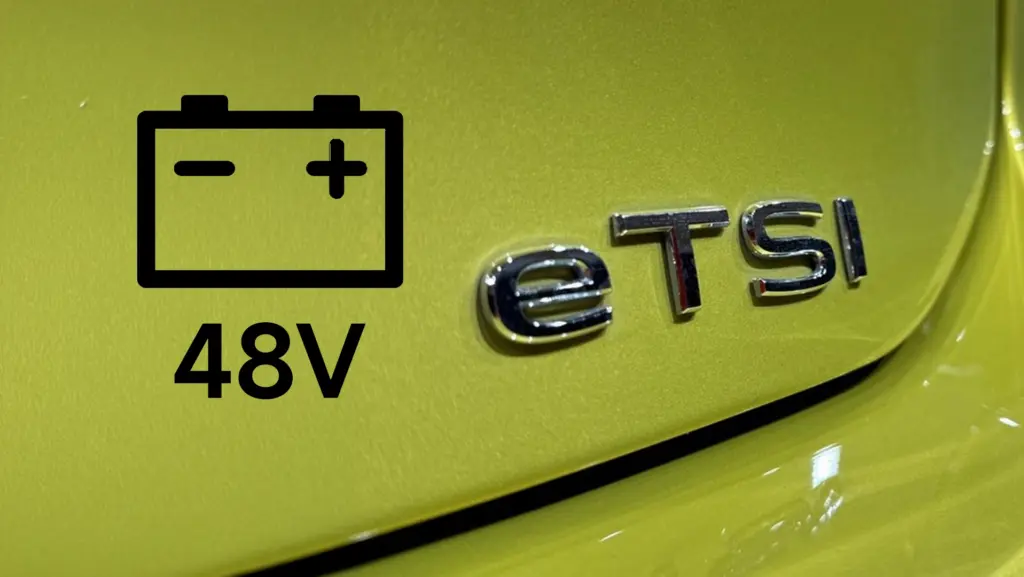

Owners of cars with VAG 1.0 eTSI and 1.5 eTSI mild-hybrid engines may face a 48V system error linked to the vehicle’s 12V battery. In some cases, the EFB battery may not cope well with the demands of the system and could contribute to more serious 48V problems.
Why the EFB Battery Is Being Blamed
The 48V mild-hybrid system depends on stable electrical power from the vehicle’s battery system. According to the source, the EFB batteries fitted to some eTSI models can become a weak point over time.
A battery that cannot maintain stable voltage may place additional stress on the electrical system. This could eventually contribute to 48V system faults, although an EFB battery is not the only possible cause of such an error.
AGM Battery Is Suggested as a Preventive Upgrade
One suggested solution is replacing the EFB battery with an AGM battery. AGM technology is better suited to vehicles with higher electrical demands and frequent charging cycles.
The reported benefits include more stable electrical supply and potentially fewer 48V-related faults. The source estimates that switching to AGM could prevent around 70–80% of these problems, but this figure should be treated as an estimate rather than a guaranteed result.
An EFB Battery Does Not Automatically Mean Failure
It is important to separate a possible weakness from a confirmed cause. An EFB battery will not automatically damage the 48V system, and replacing it with an AGM battery cannot guarantee that every 48V fault will disappear.
If a 48V warning has already appeared, the car should be diagnosed before replacing the battery. Checking battery health, charging voltage and stored fault codes can help identify the actual cause.
For owners who want to reduce the risk of future problems, an AGM upgrade may be worth considering, particularly if the existing EFB battery is already showing signs of weakness.