
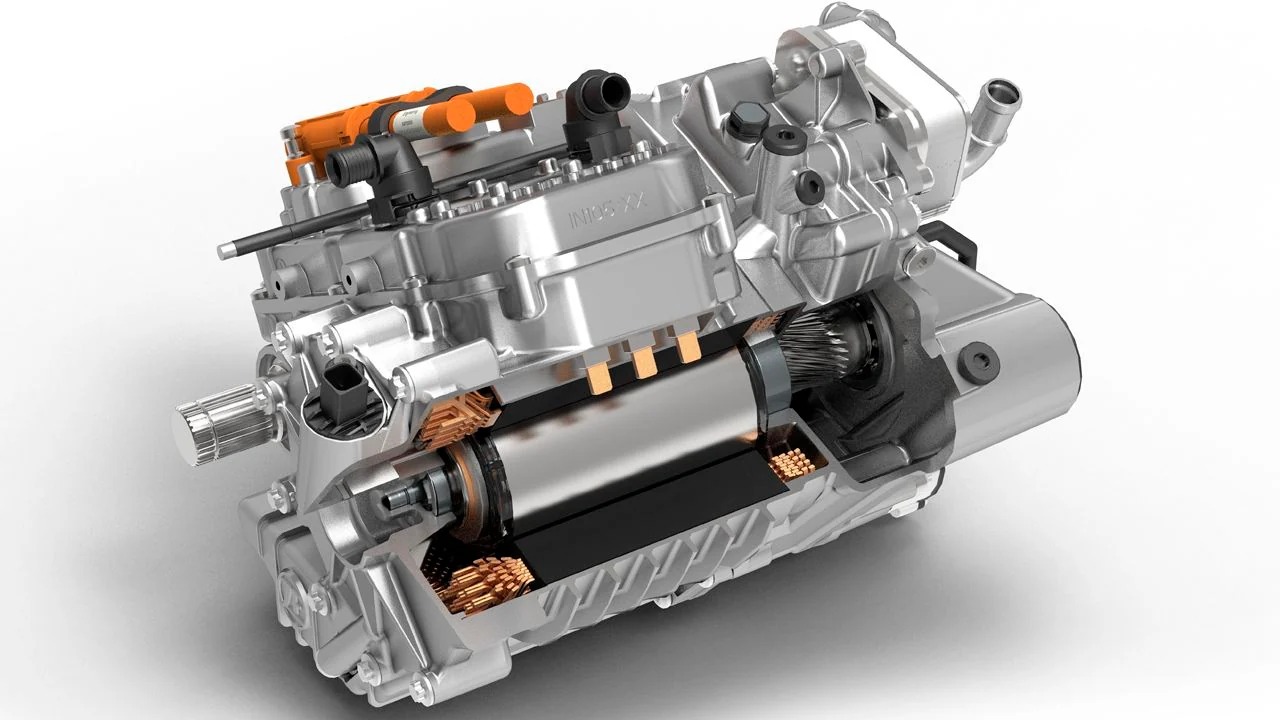
German supplier ZF has introduced a high-speed electric motor called the “High Revolution Drive,” designed to spin at up to 30,000 revolutions per minute (RPM). This new motor is up to 25% smaller and lighter than its predecessor while using half the number of magnets. ZF aims to start mass production by 2030.
How Higher RPM Enables a Smaller Motor
Electric motors generate power through a combination of torque and rotational speed. For a given power output, increasing the motor’s speed means less torque is needed. Lower torque allows the rotor to be smaller, reducing weight, size, and the amount of magnetic material required. ZF leverages this principle in the High Revolution Drive.
The motor pairs with a two-stage straight-gear transmission that has about an 18:1 ratio. This gearbox increases the torque delivered to the wheels to suitable levels. The full system, which integrates the motor, inverter, and transmission into one unit, can produce up to 200 kW (272 hp) and 3,500 Nm of torque at the wheels.
Targeting Mass-Market Vehicles with Scalable Tech
The High Revolution Drive builds on ZF’s existing modular “SELECT” platform, which combines motors, power electronics, gearboxes, and software into scalable modules. Unlike starting from scratch, this approach allows ZF to adapt the new high-speed motor to various power levels and voltage systems, including both 400V and 800V architectures.
ZF plans to offer this motor mainly for mass-market passenger cars with power outputs between 150 kW (204 hp) and 200 kW (272 hp). The company says it is in talks with several automakers and hopes to begin series production around 2030.
Engineering Challenges: Noise and Vibrations
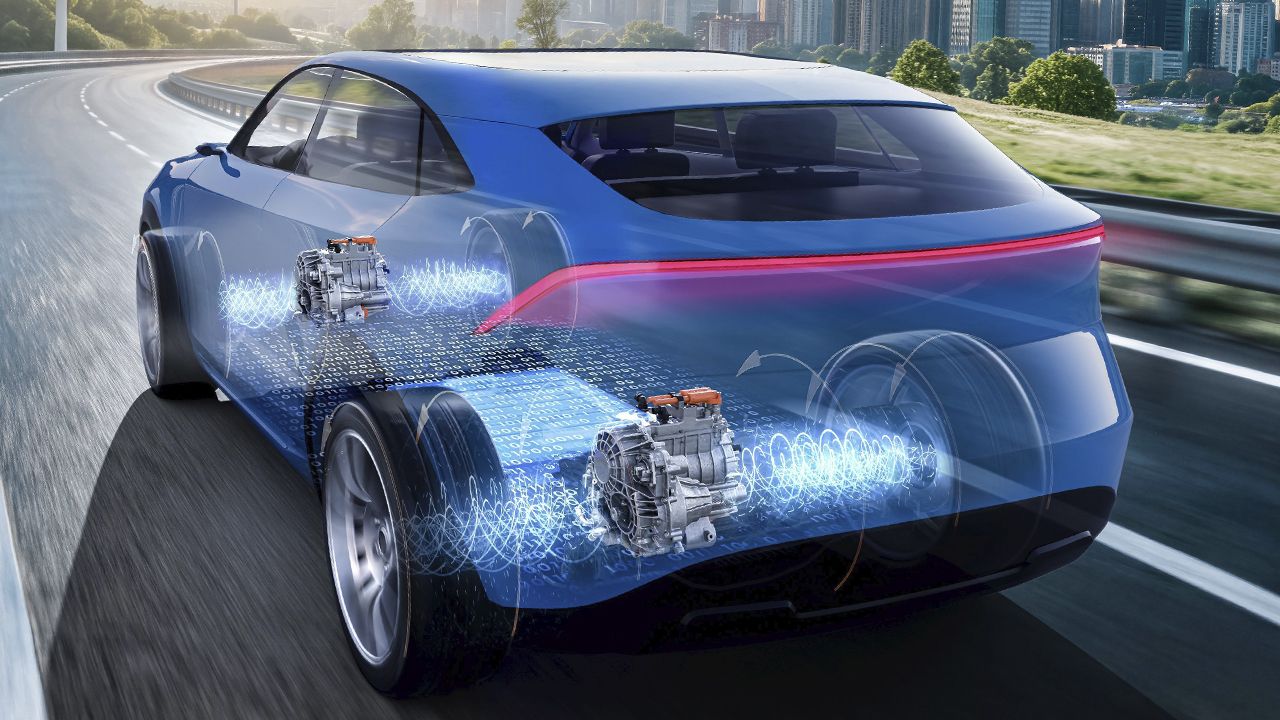
Reaching 30,000 rpm presents significant engineering challenges, especially in controlling noise and vibrations. ZF addressed these from the start by jointly designing the motor, gears, bearings, and gear tooth geometry. Their expertise in transmissions helped ensure robustness and quieter operation. For this prototype, 30,000 rpm hits the best balance between technical performance and cost.
How This Compares to Competitors
High-speed electric motors are not new to the industry. For example, Xiaomi introduced the HyperEngine V8s in 2024, which spins at 27,200 rpm and powers its high-performance SU7 Ultra sportscar. The main difference is that Xiaomi focuses on performance models, while ZF aims to make a more affordable motor for everyday vehicles.
Although the High Revolution Drive still uses permanent magnets, it cuts their number in half, which could help reduce costs and ease supply chain pressures caused by rare-earth materials.
This development from ZF could influence electric and hybrid vehicle design by offering smaller, lighter propulsion units that help improve vehicle efficiency and reduce cost.
Source: motor.es

Software Developer & Tech Journalist. Creator of Autodatalog.com. Experienced in Python, PHP, PostgreSQL, and Android system modifications. Whether I'm writing Python automation scripts, or exploring the technical specs of Fiat/Alfa Romeo engines, I love reverse-engineering how things work. Based in Istanbul, Turkey.