
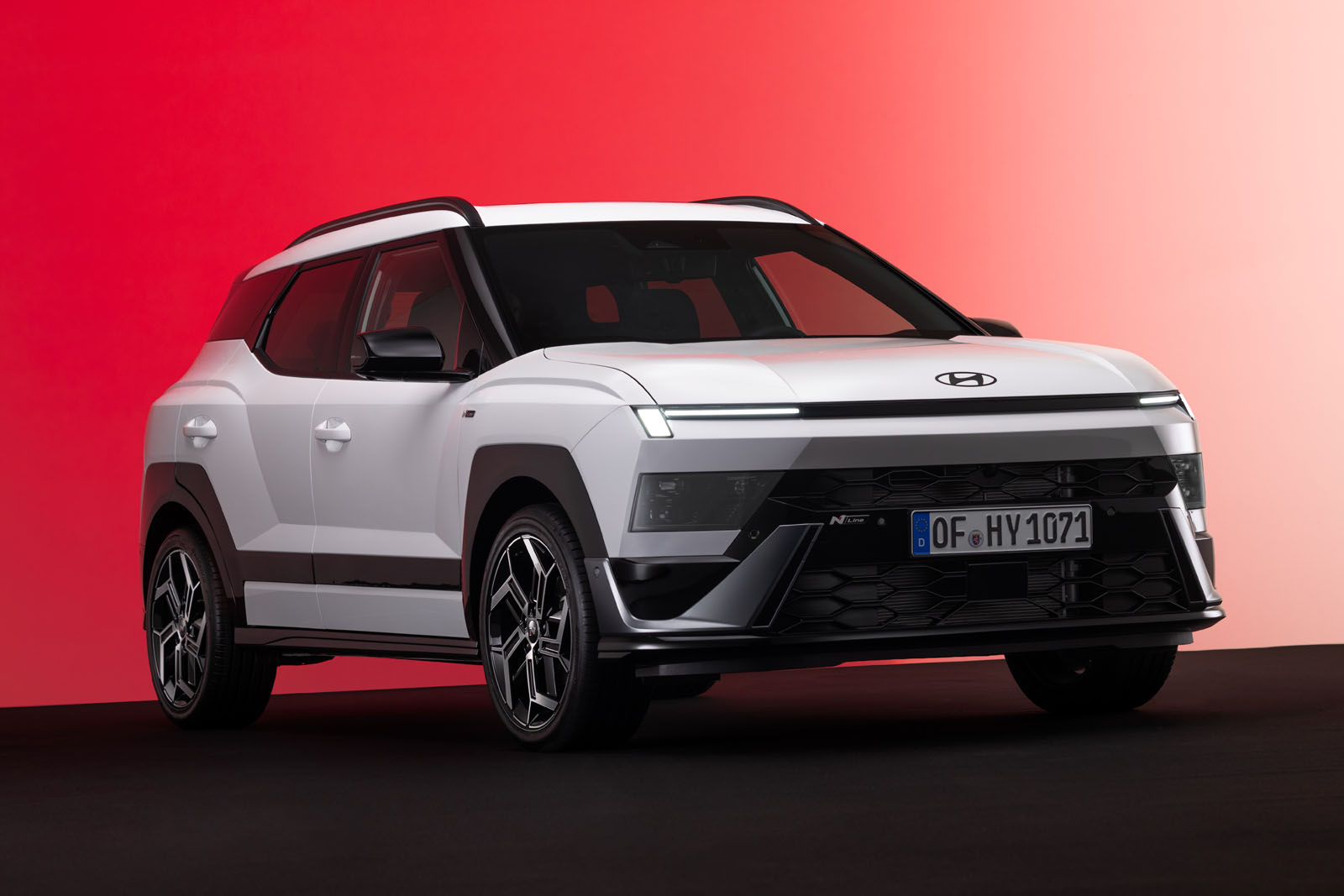
Hyundai has redesigned the Bayon to take on a stronger SUV identity in its second generation. The new Bayon is now bigger overall, featuring a boxier shape that sets it apart from the related i20 hatchback. This change aims to make the Bayon stand out more clearly as a compact SUV, rather than a small hatchback with crossover styling.
New Dimensions and SUV Styling
The latest Bayon is noticeably longer, taller, and wider than its predecessor. Hyundai’s European design chief Eduardo Ramírez explained the goal was to give the Bayon a more robust character that highlights its SUV nature. The sharper, more angular “Art of Steel” design language supports this, with harder edges replacing the smoother, car-like look of the earlier model.
There is a 20mm increase in the wheelbase, now measuring 2.6 metres, which helps create more interior space. This improvement is especially noticeable for rear-seat passengers. The rear seats have two reclining positions and feature a fold-down middle seat that acts as an armrest with cupholders. The boot space is 440 litres.
Interior and Technology Highlights
Inside, the Bayon inherits infotainment screens from Hyundai’s larger Ioniq 5, but it does not use the newer Pleos operating system seen in recent Ioniq and Tucson models. This means it lacks over-the-air update capability and app installation, although wireless Apple CarPlay and Android Auto come standard.
Engine Options and Future Hybrid
At launch, the Bayon offers a turbocharged 1.0-litre three-cylinder petrol engine with outputs of 89bhp or 113bhp. Buyers can choose between a six-speed manual or a seven-speed dual-clutch automatic gearbox. Hyundai plans to introduce a 136bhp hybrid version soon after, which required stretching the front overhang to fit the hybrid powertrain.
Market Plans and Pricing
The new Bayon is expected to reach the UK market by spring next year. Pricing hasn’t been announced yet but is likely to start around £25,000. A sportier N Line trim is expected to push the top price closer to £30,000. Hyundai Europe believes that growing the Bayon’s SUV character will help it compete more effectively in the crowded subcompact crossover segment.
Source: autocar.co.uk