
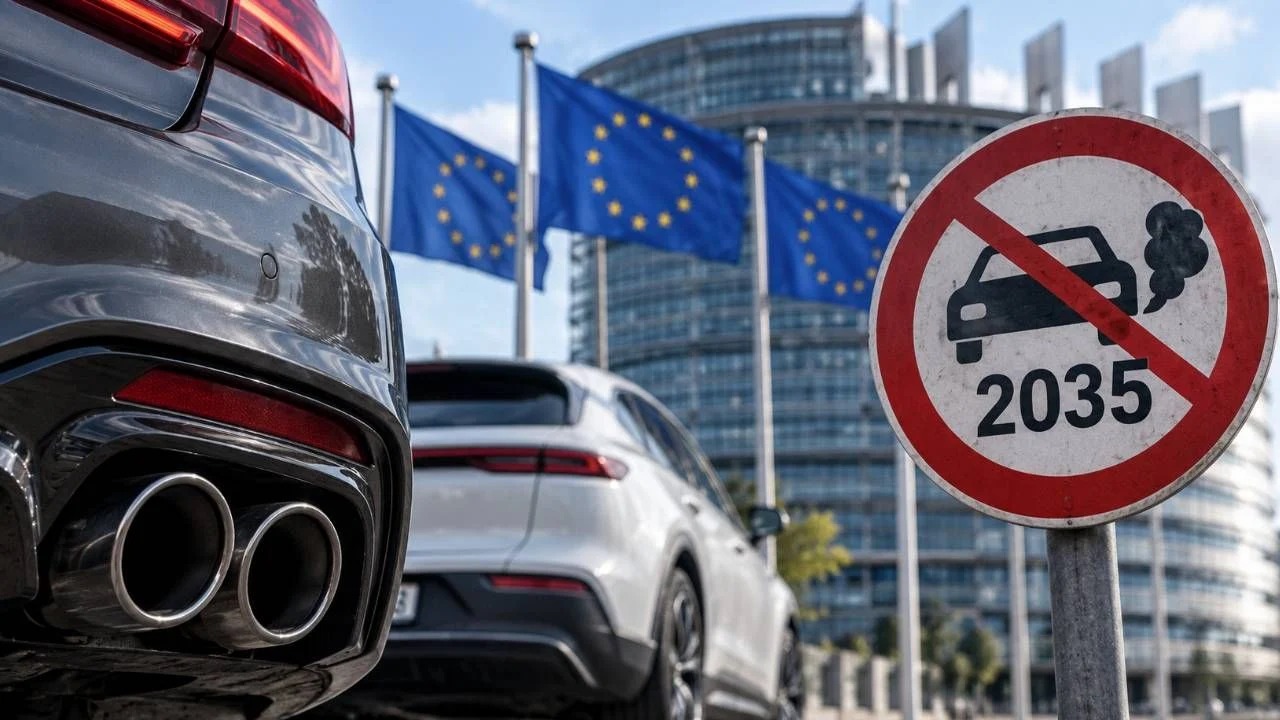
EU legislators have reached a new agreement that further reduces the CO2 emission targets for cars, potentially allowing combustion engine vehicles to remain on European roads beyond 2035. This decision follows recent pressure from countries like Germany and France, known for their strong automotive industries.
Lowering the Emission Reduction Goals
Previously, the EU aimed for a 100% reduction in CO2 emissions from new cars by 2035, essentially banning the sale of combustion engine cars from that year. However, this target has been relaxed multiple times. In late 2023, the European Commission proposed cutting the target from 100% to 90%, allowing 10% of emissions to be offset by low-carbon steel and alternative fuels (such as e-fuels and biofuels).
Now, according to Reuters, lawmakers have agreed to weaken the target even more. The new plan sets the reduction goal at 87.5% for cars with an additional 7.5% allowance coming from EU-produced low-carbon steel. For vans, the reduction target is set at 80%. This means vehicles running on alternative fuels could be treated the same as zero-emission vehicles when it comes to meeting fleet targets.
Implications for 2030 and Beyond
The new agreement also impacts the 2030 goals for reducing CO2 emissions. For passenger cars, the 55% reduction target remains unchanged. However, for vans, the expected 50% reduction has already been revised down by the Commission last year to 40%; the legislators have now agreed to lower it further to 35%. This represents a significant easing of the ambitions for light commercial vehicles.
Manufacturers will also receive more flexibility, as they can calculate average emissions over a three-year period (2029–2031) instead of meeting targets strictly in a single year. This approach is similar to previous regulations allowing averaging periods to smooth compliance challenges.
Next Steps and Current Limitations
The agreement is not final yet. It must still be approved by key political groups and then ratified by the European Parliament and member states before becoming law.
While the new rules ease some targets, they do not directly change policies related to small and affordable electric cars. The EU is also working on a new regulation called M1E that would allow manufacturers to earn supercredits to help meet emission goals, but these details still require formal approval.
This latest adjustment signals a shift in Europe’s climate ambitions, reflecting economic and political considerations in key countries with well-established combustion engine industries.
Source: motor.es