
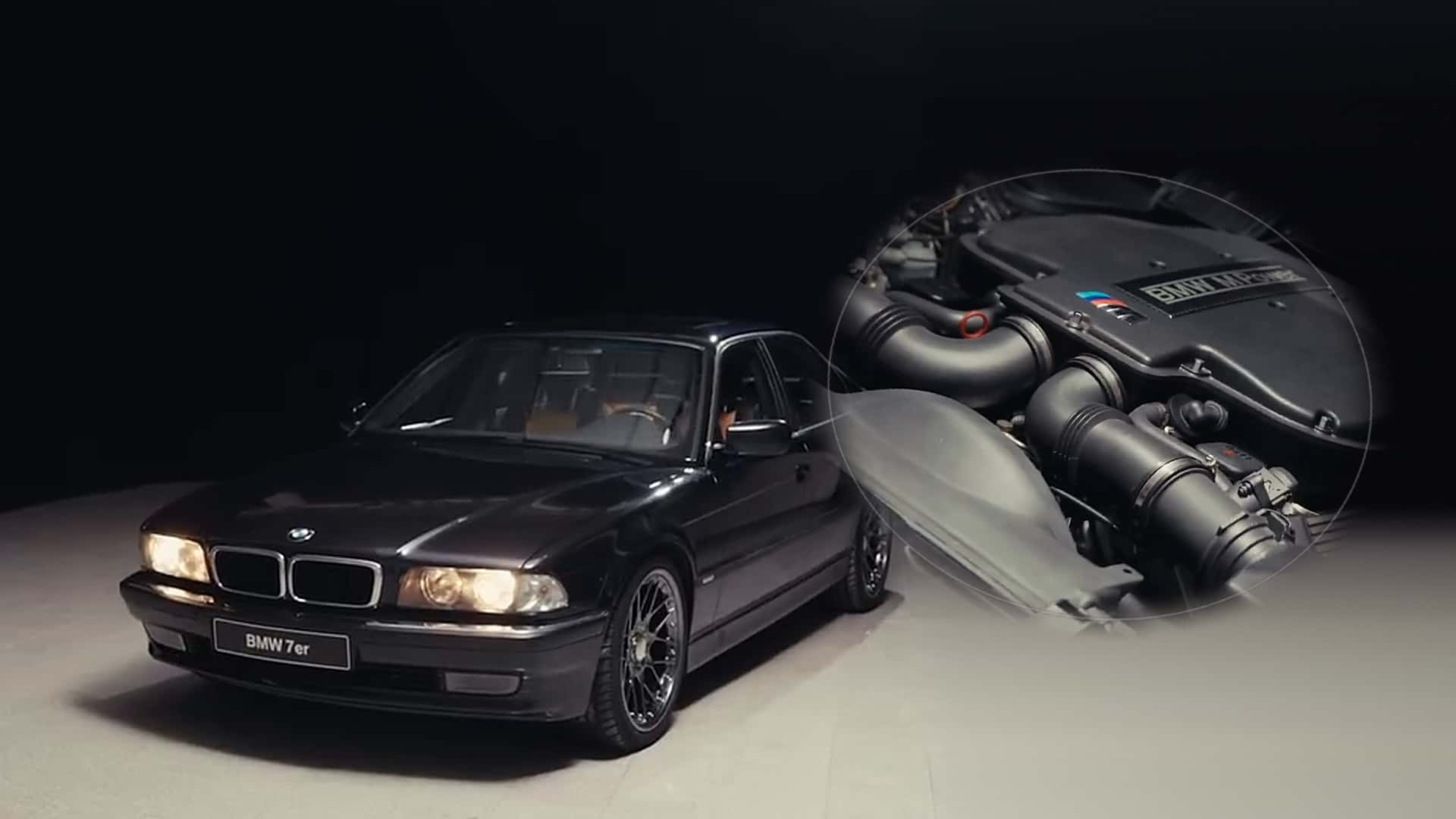
BMW has finally lifted the curtain on a little-known prototype from the 1990s: a full-fledged M7 based on the E38 7 Series. While BMW has sold powerful but standard 7 Series models for years, this high-performance M7 never reached production. The recently unveiled prototype shows what the top-tier M sedan might have been.
Under the Hood: M5 Power in a 7 Series
The prototype began life as a 740i but received major upgrades. It is powered by the S62 4.9-liter naturally aspirated V8 engine from the E39 M5, delivering 394 horsepower at 6,600 rpm. This engine is paired with a six-speed manual transmission, driving the rear wheels. The top speed matches the electronically limited 250 km/h (155 mph) of the E39 M5. Weighing 1,875 kilograms (4,134 pounds), this 7 Series is a heavy luxury sedan, yet combining M5 power with manual control promised an engaging driving experience.
Subtle Design Changes Hide Performance
Externally, BMW kept the M7 understated. At first glance, it looks like a regular E38 7 Series without aggressive bumpers or obvious M badges. However, closer inspection reveals dark cross-spoke BBS wheels and a quad-exhaust system with two outlets on each side of the rear bumper. The design remains elegant and restrained, reflecting the E38’s reputation as one of BMW’s most beautiful sedans.
Interior Details Reflect a Sportier Intent
Inside, hints of the M7’s identity continue with a two-tone black and beige leather interior. A distinctive M steering wheel and the six-speed manual gear lever signal this is no typical 7 Series. There’s also a late-1990s detail for rear passengers – a telephone handset mounted in the rear centre console, underscoring the car’s luxury status.
Why the M7 Never Reached Production
BMW has not explained why this E38 M7 project stopped at the prototype stage. One likely reason is that the existing 750i, with its powerful V12 engine, already occupied the top spot in the 7 Series range. Additionally, the E39 M5 offered comparable V8 performance in a lighter and potentially more affordable package. This may have made the M7 redundant from a business perspective.
BMW’s Other Bold 7 Series Experiments
The E38 M7 prototype is not BMW’s most extreme 7 Series experiment. That distinction goes to the late 1980s E32 7 Series “Goldfish” prototype, powered by a 6.7-liter V16 engine producing 402 horsepower. Due to the size of the engine and its cooling needs, the design included large rear cooling ducts, giving it a distinctive look. A second V16 prototype followed in 1990, known as the 750iL V16 Goldfish, which had a more conventional body shape but was longer than today’s 7 Series.
Neither V16 prototype reached production, and BMW eventually stopped pursuing models above the flagship 7 Series. However, these projects alongside the secretive E38 M7 illustrate the innovative and daring spirit of BMW’s engineers before stricter emissions regulations constrained such developments.
BMW Classic’s reveal of the E38 M7 prototype offers a unique glimpse at what might have been a powerful, manual-transmission luxury sedan in the 1990s. It remains a fascinating chapter in BMW’s performance history.
Source: motor1.com

Software Developer & Tech Journalist. Creator of Autodatalog.com. Experienced in Python, PHP, PostgreSQL, and Android system modifications. Whether I'm writing Python automation scripts, or exploring the technical specs of Fiat/Alfa Romeo engines, I love reverse-engineering how things work. Based in Istanbul, Turkey.