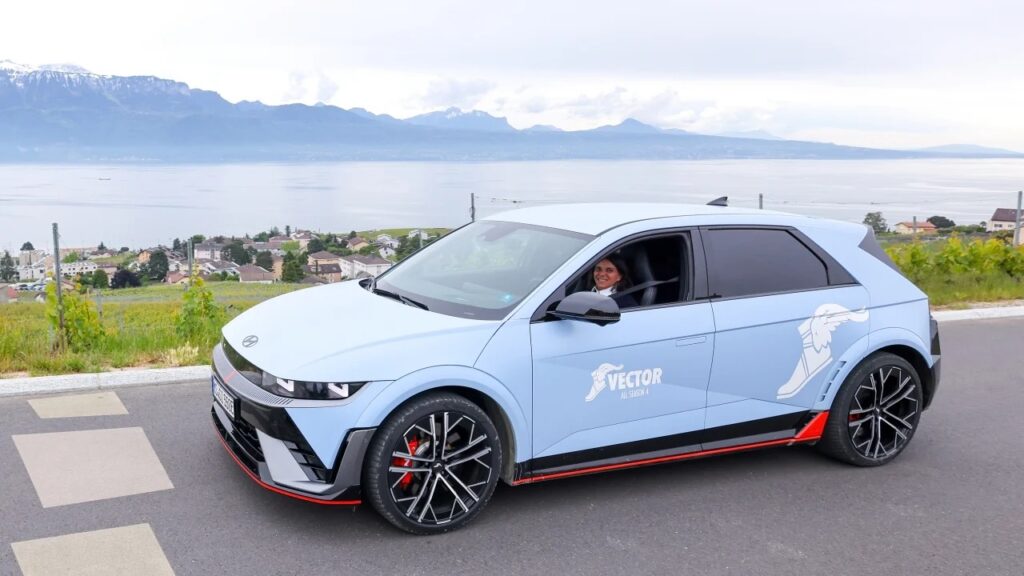

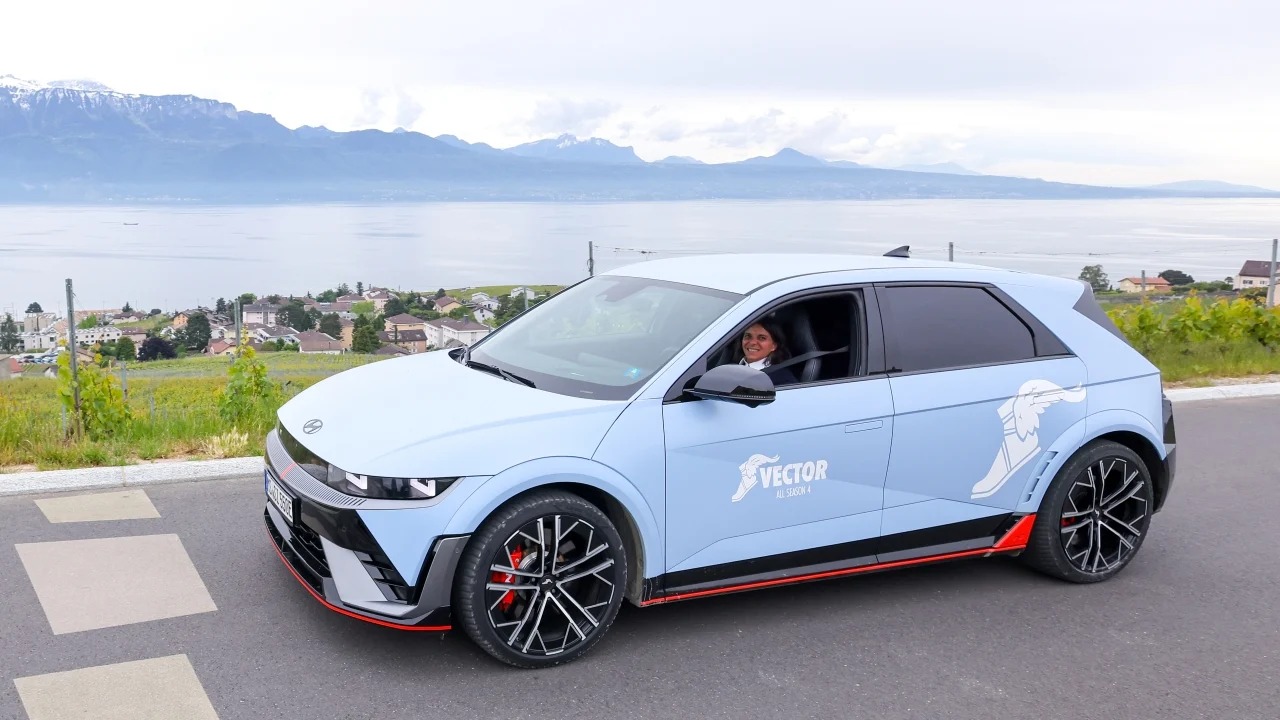
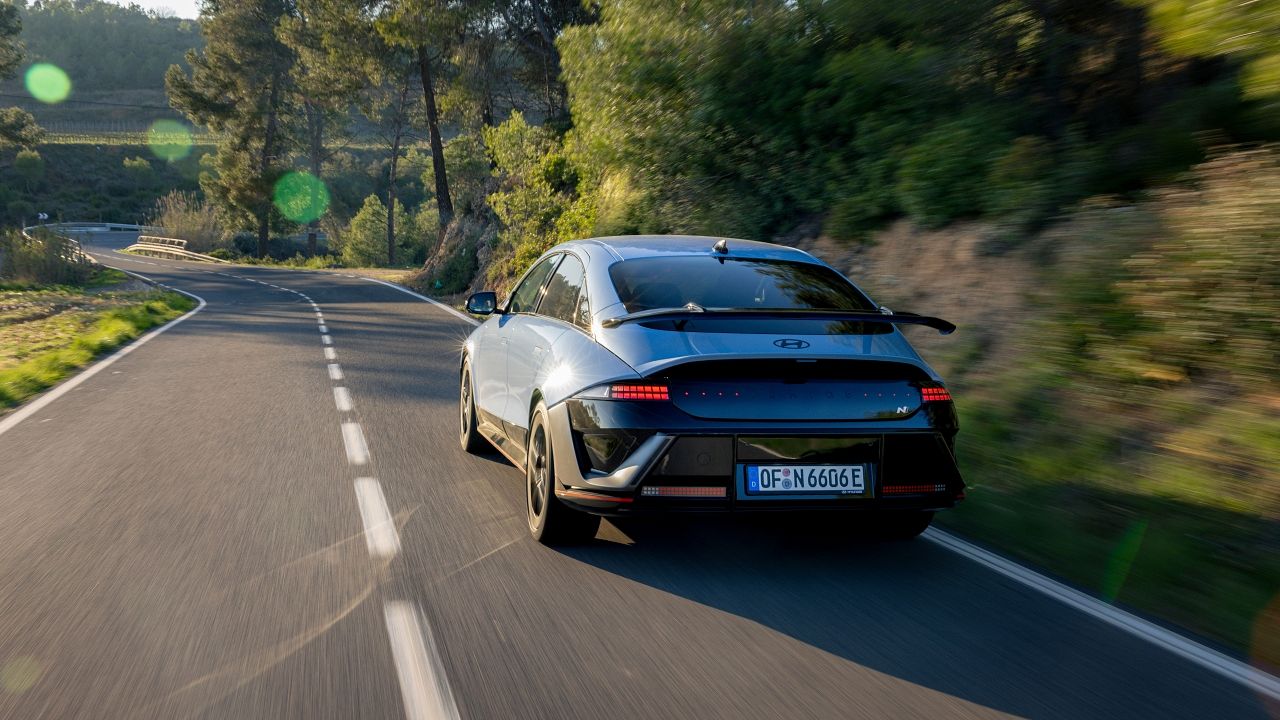
Hyundai is working to make its N electric cars feel more like traditional gasoline vehicles. The company has patented a system that adds simulated engine braking to models like the IONIQ 5 N and IONIQ 6 N. This feature aims to improve the driving experience by mimicking how manual transmission cars slow down when the accelerator is released.
Adding Realism to Electric Driving
Current Hyundai N EVs include the N Shift feature, which lets drivers simulate a manual gearbox. This includes artificial engine sounds and gear change effects controlled through paddle shifters. However, these sounds come only from speakers, without a physical feedback linked to the car’s deceleration.
The newly patented system builds on the existing Virtual Gear Shift (VGS) by simulating an eight-speed gearbox, even though the vehicle still uses a single-speed electric transmission. When the driver lifts off the accelerator, the car adjusts how much regenerative braking is applied, depending on the virtual gear selected.
How the Patented Engine Braking Works
Each simulated gear has its own torque curve controlling the regenerative braking level. So in lower gears, the system applies stronger braking, closely copying the feel of engine braking in a gasoline car. Downshifting increases the regeneration effect, enhancing this sensation.
Additionally, a feature called ShiftFeel Torque generates a light torque pulse during gear changes. It uses the braking energy to recharge the battery and adds a slight physical feedback to the drive. Driver information displays will show virtual gear number, vehicle speed, and calculated engine RPMs.
Maintaining the Emotional Appeal of N Electric Models
These developments are part of Hyundai’s effort to make their electric cars emotionally engaging. Beyond pure performance, they focus on delivering a fun and familiar driving feeling. Other virtual elements include simulated rev limiters, gearshift jerks, and artificial exhaust sounds.
It remains unconfirmed if this new engine braking system will be added to current models via software updates or reserved for future vehicles. Hyundai plans to introduce advanced driver assistance software powered by Nvidia by 2028 and 2029, which could coincide with these features.
While not technically needed for EVs, this kind of virtual feedback helps make electric N cars stand out by giving drivers sensations similar to combustion engines. Hyundai’s approach shows how electric cars can offer new experiences without losing the character that makes sporty cars enjoyable.
Source: motor.es