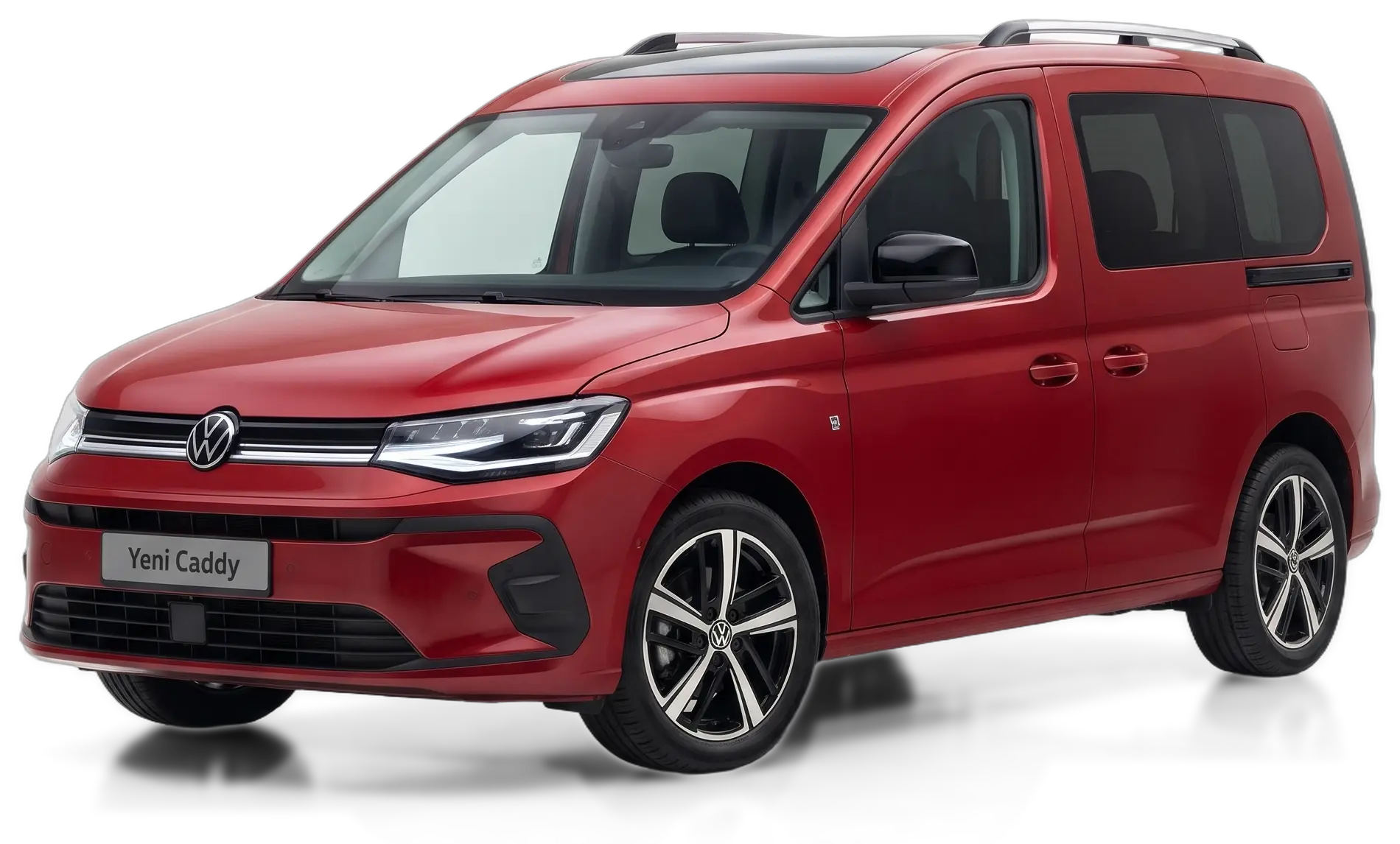
Volkswagen Caddy 2.0 TDI (122 Hp) DSG vs Volkswagen Caddy 1.5 TSI (116 Hp)
Compare up to three variants side by side. Add cars from specs pages or pick a model below.
No cars in comparison yet
Open a model specs page and tap Compare, or browse the catalog to add a car.
Browse cars| Specification | 2.0 TDI (122 Hp) DSG | 1.5 TSI (116 Hp) | — |
|---|---|---|---|
| Overview | |||
| Generation | Gen 5 Facelift 1 | Gen 5 Facelift 1 | — |
| Year | 2026–present | 2026–present | — |
| Platform | VW MQB / MQB EVO | VW MQB / MQB EVO | — |
| Variant | 2.0 TDI (122 Hp) DSG | 1.5 TSI (116 Hp) | — |
| Body type | Minivan | Minivan | — |
| Engine type | Fuel | Fuel | — |
| Fuel type | Diesel | Petrol | — |
| Seats | 5 | 5 | — |
| Doors | 5 | 5 | — |
| Emission standard | Euro 6 EB | Euro 6 EB | — |
| Power & torque | |||
| Power | 122 HP | 116 HP | — |
| Power @ max rpm | 2750 rpm | 5000 rpm | — |
| Torque | 320 Nm (236 lb-ft) | 220 Nm (162 lb-ft) | — |
| Performance | |||
| Top speed | 186 km/h (116 mph) | 182 km/h (113 mph) | — |
| 0–100 km/h | 10.7 s (0-60 mph: ~10.2 s) | 11.1 s (0-60 mph: ~10.5 s) | — |
| 0–62 mph | 10.7 s (0-60 mph: ~10.2 s) | 11.1 s (0-60 mph: ~10.5 s) | — |
| 0–60 mph | 10.2 s | 10.5 s | — |
| Engine | |||
| Engine code | DXR | DXDA | — |
| Displacement | 1968 cc | 1498 cc | — |
| Cylinders | 4 | 4 | — |
| Configuration | Inline | inline | — |
| Bore | 81 mm (3.2 in) | 75 mm (2.9 in) | — |
| Stroke | 96 mm (3.8 in) | 86 mm (3.4 in) | — |
| Valves per cylinder | 4 | 4 | — |
| Injection system | Diesel Commonrail | Direct Injection | — |
| Aspiration | Turbocharger, Intercooler | Turbocharger Intercooler | — |
| Valvetrain | DOHC | — | — |
| Engine layout | Front, Transverse | Front, Transverse | — |
| Engine systems | Start & Stop System Particulate filter | Start & Stop System Particulate filter | — |
| Compression ratio | — | 12 | — |
| Drivetrain & transmission | |||
| Drive | Front wheel drive | Front wheel drive | — |
| Powertrain architecture | Internal Combustion engine | Internal Combustion engine | — |
| Drivetrain architecture | The Internal combustion engine (ICE) drives the front wheels of the vehicle. | The Internal combustion engine (ICE) drives the front wheels of the vehicle. | — |
| Gearbox type | dct | manual | — |
| Gears | 7 | 6 | — |
| Gearbox code | dq381 | mq281 | — |
| Gearbox manufacturer | vw | vw | — |
| Dimensions | |||
| Length | 4,498 mm (177.1 in) | 4,498 mm (177.1 in) | — |
| Width | 1,855 mm (73 in) | 1,855 mm (73 in) | — |
| Height | 1,826 mm (71.9 in) | 1,826 mm (71.9 in) | — |
| Wheelbase | 2,751 mm (108.3 in) | 2,751 mm (108.3 in) | — |
| Front track | 1,568 mm (61.7 in) | 1,568 mm (61.7 in) | — |
| Rear track | 1,603 mm (63.1 in) | 1,603 mm (63.1 in) | — |
| Boot space | 0 – 2556 L (0 – 90.3 cu ft) | 0 – 2556 L (0 – 90.3 cu ft) | — |
| Turning circle | 11.4 m | 11.4 m | — |
| Mass | |||
| Kerb weight | 1,628 kg (3,589 lbs) | 1,517 kg (3,344 lbs) | — |
| Max weight | 2,250 kg (4,960 lbs) | 2,150 kg (4,740 lbs) | — |
| Max load | 586 kg (1,292 lbs) | 609 kg (1,343 lbs) | — |
| Consumption & emissions | |||
| Fuel combined (WLTP) | 5.5 L/100 km (42.8 US MPG) | 6.5 L/100 km (36.2 US MPG) | — |
| CO₂ (WLTP) | 144 g/km | 148 g/km | — |
| Fuel tank | 50.0 L (13.2 US gal) | 50.0 L (13.2 US gal) | — |
| Chassis & brakes | |||
| Front suspension | Independent, McPherson type with coil spring and anti-roll bar | Independent, McPherson type with coil spring and anti-roll bar | — |
| Rear suspension | Rigid axle suspension, Anti-roll bar, Coil spring | Rigid axle suspension, Anti-roll bar, Coil spring | — |
| Front brakes | Ventilated discs | Ventilated discs | — |
| Rear brakes | Disc | Disc | — |
| Steering type | Steering rack and pinion | Steering rack and pinion | — |
| Power steering | Electric Steering | Electric Steering | — |
| Tire size | 205/60 R16; 215/55 R17; 225/45 R18 | 205/60 R16; 215/55 R17; 225/45 R18 | — |
| Wheel rims | 6.5J x 16; 6.5J x 17; 7J x 18 | 6.5J x 16; 6.5J x 17; 7J x 18 | — |
| Assisting systems | ABS (Anti-lock braking system) | ABS (Anti-lock braking system) | — |
| Efficiency ratios | |||
| Weight-to-power | 13.3 | 13.1 | — |
| Weight-to-torque | 5.1 | 6.9 | — |
| Max roof load | 100 kg (220 lbs) | 100 kg (220 lbs) | — |
| Other | |||
| Start Of Production | 2026 | 2026 | — |
| End Of Production | present | present | — |
| Width Including Mirrors | 2100 | 2100 | — |
| Maximum Speed Mph | 116 | 113 | — |
| Length In | 177.1 | 177.1 | — |
| Width In | 73 | 73 | — |
| Height In | 71.9 | 71.9 | — |
| Wheelbase In | 108.3 | 108.3 | — |
| Front Track In | 61.7 | 61.7 | — |
| Rear Back Track In | 63.1 | 63.1 | — |
| Width Including Mirrors In | 82.7 | 82.7 | — |
| Kerb Weight Lbs | 3589 | 3344 | — |
| Max Weight Lbs | 4960 | 4740 | — |
| Max Load Lbs | 1292 | 1343 | — |
| Torque Lbft | 236 | 162 | — |
| Trunk Boot Space Max Cuft | 90.3 | 90.3 | — |
| Fuel Tank Capacity Gal | 13.2 | 13.2 | — |
| Fuel Economy Combined Wltp Mpg Us | 42.8 | 36.2 | — |