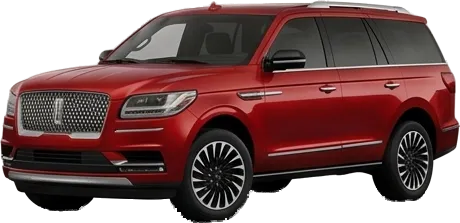
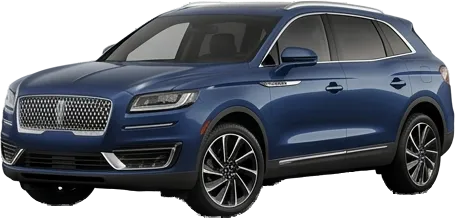
Lincoln Nautilus 2.0 Turbo (310 Hp) HEV AWD CVT vs Lincoln Nautilus 2.7 V6 (335 Hp) Automatic
Compare up to three variants side by side. Add cars from specs pages or pick a model below.
No cars in comparison yet
Open a model specs page and tap Compare, or browse the catalog to add a car.
Browse cars| Specification | 2.0 Turbo (310 Hp) HEV AWD CVT | 2.7 V6 (335 Hp) Automatic | — |
|---|---|---|---|
| Overview | |||
| Generation | Gen 2 | Gen 1 | — |
| Year | 2023–present | 2018–2020 | — |
| Platform | Ford CD4 | Ford CD4 | — |
| Variant | 2.0 Turbo (310 Hp) HEV AWD CVT | 2.7 V6 (335 Hp) Automatic | — |
| Body type | suv | suv | — |
| Engine type | Hybrid | Fuel | — |
| Fuel type | Petrol | Petrol | — |
| Seats | 5 | 5 | — |
| Doors | 5 | 5 | — |
| Power & torque | |||
| Power | 250 HP | 335 HP | — |
| Power @ max rpm | 5500 rpm | 5500 rpm | — |
| Torque | 373 Nm (275 lb-ft) | 515 Nm (380 lb-ft) | — |
| Torque @ max rpm | 3000 rpm | 3250 rpm | — |
| Engine | |||
| Engine code | ECOBOOST-2.0 | ECOBOOST-2.7 | — |
| Cylinders | 4 | 6 | — |
| Configuration | inline | V Engine | — |
| Compression ratio | 10 | 10 | — |
| Injection system | Direct Injection | Direct Injection | — |
| Aspiration | Turbocharger Intercooler | Twin Turbo Intercooler | — |
| Valvetrain | Ti Vct | dohc | — |
| Oil capacity | 5.2 L | 5.7 L | — |
| Coolant | 8.1 L | 11.8 L | — |
| Engine layout | Front Transverse | Front Transverse | — |
| Engine systems | Start Stop System | — | — |
| Bore | — | 84 mm (3.3 in) | — |
| Stroke | — | 84 mm (3.3 in) | — |
| Valves per cylinder | — | 4 | — |
| Drivetrain & transmission | |||
| Drive | All wheel drive (4x4) | Front Wheel Drive | — |
| Powertrain architecture | Fhev Full Hybrid Electric Vehicle | Internal Combustion Engine | — |
| Drivetrain architecture | The Internal Combustion Engine Ice And The Electric Motor Permanently Drive The Front Wheels Of The Vehicle Capable Of Running In Full Electric Or Mixed Mode And If Necessary Through The Electrically Or Mechanically Controlled Clutch The Rear Wheels Are Driven | The Internal Combustion Engine Ice Drives The Front Wheels Of The Vehicle | — |
| Gearbox type | e_cvt | torque_converter | — |
| Gears | variable | 8 | — |
| Gearbox code | hf45 | 8f57 | — |
| Gearbox manufacturer | ford | ford | — |
| Dimensions | |||
| Length | 4,907 mm (193.2 in) | 4,826 mm (190 in) | — |
| Height | 1,732 mm (68.2 in) | 1,681 mm (66.2 in) | — |
| Wheelbase | 2,901 mm (114.2 in) | 2,850 mm (112.2 in) | — |
| Front track | 1,656 mm (65.2 in) | 1,646 mm (64.8 in) | — |
| Rear track | 1,659 mm (65.3 in) | 1,643 mm (64.7 in) | — |
| Boot space | 1031 – 2019 L (36.4 – 71.3 cu ft) | 1053 – 1948 L (37.2 – 68.8 cu ft) | — |
| Turning circle | 11.4 m | 11.9 m | — |
| Mass | |||
| Kerb weight | 2,049 kg (4,517 lbs) | 1,879 kg (4,142 lbs) | — |
| Consumption & emissions | |||
| Fuel tank | 76.0 L (20.1 US gal) | 68.0 L (18 US gal) | — |
| Fuel combined | — | 10.7 L/100 km (22 US MPG) | — |
| Fuel urban | — | 11.8 L/100 km (19.9 US MPG) | — |
| Fuel extra urban | — | 8.7 L/100 km (27 US MPG) | — |
| Chassis & brakes | |||
| Front suspension | Independent Type Mcpherson With Coil Spring And Anti Roll Bar | Independent Type Mcpherson With Coil Spring And Anti Roll Bar | — |
| Rear suspension | Independent Multi Link Spring Suspension With Stabilizer | Independent Multi Link Spring Suspension With Stabilizer | — |
| Front brakes | Ventilated discs, 345x28 mm | Ventilated Discs | — |
| Rear brakes | Disc, 320x11 mm | disc | — |
| Steering type | Steering Rack And Pinion | Steering Rack And Pinion | — |
| Power steering | Electric Steering | Electric Steering | — |
| Tire size | 255/50 R21; 255/45 R22 | 245/50 R20; 265/40 R21 | — |
| Wheel rims | 21; 22 | 20; 21 | — |
| Assisting systems | Abs Anti Lock Braking System | Abs Anti Lock Braking System | — |
| Efficiency ratios | |||
| Weight-to-power | 6.6 kg/Hp, 151.3 Hp/tonne | 5.6 kg/Hp, 178.3 Hp/tonne | — |
| Weight-to-torque | 5.5 kg/Nm, 182 Nm/tonne | 3.6 kg/Nm, 274.1 Nm/tonne | — |
| Electric / hybrid | |||
| Electric motor power | 136 HP | — | — |
| Other | |||
| Start Of Production | 2023 | 2018 | — |
| Width Including Mirrors | 2169 | 2187 | — |
| Width With Mirrors Folded | 2027 | 1999 | — |
| Length In | 193.2 | 190 | — |
| Height In | 68.2 | 66.2 | — |
| Wheelbase In | 114.2 | 112.2 | — |
| Front Track In | 65.2 | 64.8 | — |
| Rear Back Track In | 65.3 | 64.7 | — |
| Width Including Mirrors In | 85.4 | 86.1 | — |
| Width With Mirrors Folded In | 79.8 | 78.7 | — |
| Kerb Weight Lbs | 4517 | 4142 | — |
| Torque Lbft | 275 | 380 | — |
| Trunk Boot Space Min Cuft | 36.4 | 37.2 | — |
| Trunk Boot Space Max Cuft | 71.3 | 68.8 | — |
| Fuel Tank Capacity Gal | 20.1 | 18 | — |
| End Of Production | — | 2020 | — |
| Fuel Economy Combined Mpg Us | — | 22 | — |