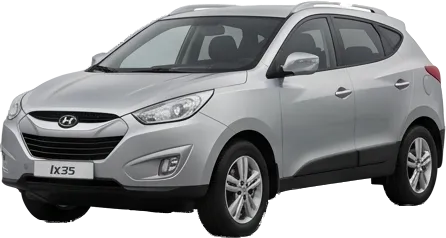
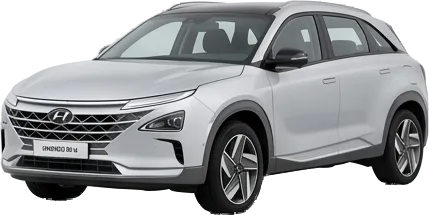
Hyundai ix35 (136 Hp) Fuel Cell Automatic vs Hyundai Nexo 1.56 kWh (184 Hp) Fuel Cell CVT
Compare up to three variants side by side. Add cars from specs pages or pick a model below.
No cars in comparison yet
Open a model specs page and tap Compare, or browse the catalog to add a car.
Browse cars| Specification | (136 Hp) Fuel Cell Automatic | 1.56 kWh (184 Hp) Fuel Cell CVT | — |
|---|---|---|---|
| Overview | |||
| Generation | Gen 1 | Gen 1 | — |
| Year | 2013–present | 2018–2025 | — |
| Platform | Hyundai Elantra | Hyundai FCEV | — |
| Variant | (136 Hp) Fuel Cell Automatic | 1.56 kWh (184 Hp) Fuel Cell CVT | — |
| Body type | suv | suv | — |
| Engine type | Fuel | Fuel | — |
| Fuel type | Petrol | Petrol | — |
| Seats | 5 | 5 | — |
| Doors | 5 | 5 | — |
| Performance | |||
| Top speed | 160 km/h (99 mph) | 179 km/h (111 mph) | — |
| 0–100 km/h | 12.5 s (0-60 mph: ~11.9 s) | 9.2 s (0-60 mph: ~8.7 s) | — |
| 0–62 mph | 12.5 s (0-60 mph: ~11.9 s) | 9.2 s (0-60 mph: ~8.7 s) | — |
| 0–60 mph | 11.9 s | 8.7 s | — |
| Engine | |||
| Engine code | FCEV | FCEV | — |
| Drivetrain & transmission | |||
| Drive | Front Wheel Drive | Front Wheel Drive | — |
| Powertrain architecture | Fcev Fuel Cell Electric Vehicle | Fcev Fuel Cell Electric Vehicle | — |
| Gearbox type | not_applicable | not_applicable | — |
| Gears | 1 | 1 | — |
| Gearbox code | not_applicable | not_applicable | — |
| Gearbox manufacturer | hyundai | hyundai | — |
| Dimensions | |||
| Length | 4,410 mm (173.6 in) | 4,670 mm (183.9 in) | — |
| Width | 1,820 mm (71.7 in) | 1,860 mm (73.2 in) | — |
| Height | 1,650 mm (65 in) | 1,630 mm (64.2 in) | — |
| Wheelbase | 2,640 mm (103.9 in) | 2,790 mm (109.8 in) | — |
| Front track | 1,585 mm (62.4 in) | 1,614 mm (63.5 in) | — |
| Rear track | 1,586 mm (62.4 in) | 1,625 mm (64 in) | — |
| Boot space | 465 – 1436 L (16.4 – 50.7 cu ft) | 461 – 1466 L (16.3 – 51.8 cu ft) | — |
| Ground clearance | 170 mm (6.7 in) | 162 mm (6.4 in) | — |
| Turning circle | 10.6 m | 11.2 m | — |
| Mass | |||
| Kerb weight | 1,846 kg (4,070 lbs) | 1,889 kg (4,165 lbs) | — |
| Max weight | 2,250 kg (4,960 lbs) | 2,340 kg (5,159 lbs) | — |
| Max load | 404 kg (891 lbs) | 451 kg (994 lbs) | — |
| Chassis & brakes | |||
| Front brakes | Ventilated Discs | Ventilated Discs | — |
| Rear brakes | disc | disc | — |
| Tire size | 225/60 R17 | 225/60 R17; 245/45 R19 | — |
| Wheel rims | 6.5J x 17 | 7.0J x 17; 7.5J x 19 | — |
| Assisting systems | Abs Anti Lock Braking System | Abs Anti Lock Braking System | — |
| Front suspension | — | Independent Type Mcpherson With Coil Spring And Anti Roll Bar | — |
| Rear suspension | — | Independent Multi Link Spring Suspension With Stabilizer | — |
| Steering type | — | Steering Rack And Pinion | — |
| Power steering | — | Electric Steering | — |
| Efficiency ratios | |||
| Weight-to-power | 13.6 kg/Hp, 73.7 Hp/tonne | 10.3 kg/Hp, 97.4 Hp/tonne | — |
| Max roof load | — | 100 kg (220 lbs) | — |
| Electric / hybrid | |||
| Electric motor power | 136 HP | 163 HP | — |
| Electric motor torque | 300 Nm (221 lb-ft) | 395 Nm (291 lb-ft) | — |
| Battery capacity (gross) | — | 1.6 kWh | — |
| Other | |||
| Start Of Production | 2013 | 2018 | — |
| Front Overhang | 880 | 960 | — |
| Rear Overhang | 890 | 920 | — |
| Maximum Speed Mph | 99 | 111 | — |
| Length In | 173.6 | 183.9 | — |
| Width In | 71.7 | 73.2 | — |
| Height In | 65 | 64.2 | — |
| Wheelbase In | 103.9 | 109.8 | — |
| Front Track In | 62.4 | 63.5 | — |
| Rear Back Track In | 62.4 | 64 | — |
| Ride Height Ground Clearance In | 6.7 | 6.4 | — |
| Kerb Weight Lbs | 4070 | 4165 | — |
| Max Weight Lbs | 4960 | 5159 | — |
| Max Load Lbs | 891 | 994 | — |
| Trunk Boot Space Min Cuft | 16.4 | 16.3 | — |
| Trunk Boot Space Max Cuft | 50.7 | 51.8 | — |
| End Of Production | — | 2025 | — |
| Fuel Tank Capacity Gal | — | 1.7 | — |
| Fuel Economy Combined Mpg Us | — | 280 | — |
| Fuel Economy Combined Wltp Mpg Us | — | 247.6 | — |
| Consumption & emissions | |||
| Fuel combined (WLTP) | — | 1.0 L/100 km (247.6 US MPG) | — |
| Fuel combined | — | 0.8 L/100 km (280 US MPG) | — |
| Fuel urban | — | 0.8 L/100 km (305.5 US MPG) | — |
| Fuel extra urban | — | 0.9 L/100 km (264.3 US MPG) | — |
| Fuel tank | — | 6.3 L (1.7 US gal) | — |