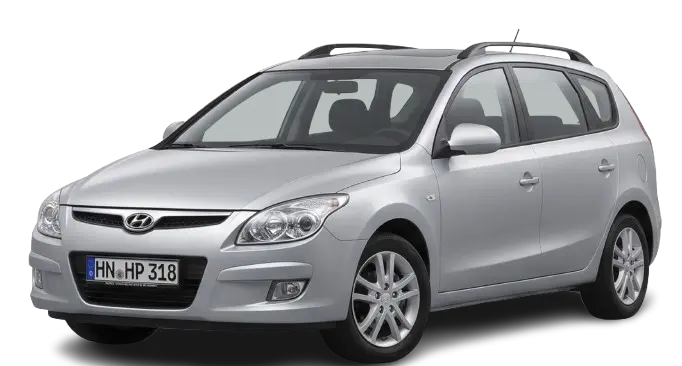
Hyundai i30 2.0 CRDi (140 Hp) vs Hyundai i30 2.0 (143 Hp)
Compare up to three variants side by side. Add cars from specs pages or pick a model below.
No cars in comparison yet
Open a model specs page and tap Compare, or browse the catalog to add a car.
Browse cars| Specification | 2.0 CRDi (140 Hp) | 2.0 (143 Hp) | — |
|---|---|---|---|
| Overview | |||
| Generation | Gen 1 | Gen 1 | — |
| Year | 2008–2010 | 2008–2010 | — |
| Platform | Hyundai-Kia FD | Hyundai-Kia FD | — |
| Variant | 2.0 CRDi (140 Hp) | 2.0 (143 Hp) | — |
| Body type | Station Wagon Estate | Station Wagon Estate | — |
| Engine type | Fuel | Fuel | — |
| Fuel type | Diesel | Petrol | — |
| Seats | 5 | 5 | — |
| Doors | 5 | 5 | — |
| Emission standard | Euro 4 | Euro 4 | — |
| Power & torque | |||
| Power | 140 HP | 143 HP | — |
| Power @ max rpm | 3800 rpm | 6000 rpm | — |
| Torque | 305 Nm (225 lb-ft) | 186 Nm (137 lb-ft) | — |
| Torque @ min rpm | 1800 rpm | — | — |
| Torque @ max rpm | 2500 rpm | 4600 rpm | — |
| Performance | |||
| Top speed | 205 km/h (127 mph) | 205 km/h (127 mph) | — |
| 0–100 km/h | 10.7 s (0-60 mph: ~10.2 s) | 11.1 s (0-60 mph: ~10.5 s) | — |
| 0–62 mph | 10.7 s (0-60 mph: ~10.2 s) | 11.1 s (0-60 mph: ~10.5 s) | — |
| 0–60 mph | 10.2 s | 10.5 s | — |
| Engine | |||
| Engine code | D4EA | G4GC | — |
| Displacement | 1991 cc | 1975 cc | — |
| Cylinders | 4 | 4 | — |
| Configuration | inline | inline | — |
| Bore | 83 mm (3.3 in) | 82 mm (3.2 in) | — |
| Stroke | 92 mm (3.6 in) | 94 mm (3.7 in) | — |
| Compression ratio | 17.3 | 10 | — |
| Valves per cylinder | 4 | 4 | — |
| Injection system | Diesel Commonrail | Multi Port Manifold Injection | — |
| Aspiration | Turbocharger Intercooler | Naturally Aspirated Engine | — |
| Oil capacity | 6.7 L | 4.0 L | — |
| Coolant | 7.3 L | 7.0 L | — |
| Engine layout | Front Transverse | Front Transverse | — |
| Valvetrain | — | dohc | — |
| Drivetrain & transmission | |||
| Drive | Front Wheel Drive | Front Wheel Drive | — |
| Powertrain architecture | Internal Combustion Engine | Internal Combustion Engine | — |
| Drivetrain architecture | The Internal Combustion Engine Ice Drives The Front Wheels Of The Vehicle | The Internal Combustion Engine Ice Drives The Front Wheels Of The Vehicle | — |
| Gearbox type | manual | manual | — |
| Gears | 6 | 5 | — |
| Gearbox code | manual | manual | — |
| Gearbox manufacturer | hyundai | hyundai | — |
| Dimensions | |||
| Length | 4,475 mm (176.2 in) | 4,475 mm (176.2 in) | — |
| Width | 1,775 mm (69.9 in) | 1,775 mm (69.9 in) | — |
| Height | 1,565 mm (61.6 in) | 1,565 mm (61.6 in) | — |
| Wheelbase | 2,700 mm (106.3 in) | 2,700 mm (106.3 in) | — |
| Front track | 1,538 mm (60.6 in) | 1,538 mm (60.6 in) | — |
| Rear track | 1,536 mm (60.5 in) | 1,536 mm (60.5 in) | — |
| Boot space | 415 – 1395 L (14.7 – 49.3 cu ft) | 415 – 1395 L (14.7 – 49.3 cu ft) | — |
| Turning circle | 10.4 m | 10.4 m | — |
| Mass | |||
| Kerb weight | 1,381 kg (3,045 lbs) | 1,296 kg (2,857 lbs) | — |
| Max weight | 1,970 kg (4,343 lbs) | 1,890 kg (4,167 lbs) | — |
| Max load | 589 kg (1,299 lbs) | 594 kg (1,310 lbs) | — |
| Consumption & emissions | |||
| Fuel combined | 5.5 L/100 km (42.8 US MPG) | 7.1 L/100 km (33.1 US MPG) | — |
| Fuel urban | 7.2 L/100 km (32.7 US MPG) | 9.3 L/100 km (25.3 US MPG) | — |
| Fuel extra urban | 4.4 L/100 km (53.5 US MPG) | 5.9 L/100 km (39.9 US MPG) | — |
| Fuel tank | 53.0 L (14 US gal) | 53.0 L (14 US gal) | — |
| Chassis & brakes | |||
| Front suspension | Independent Type Mcpherson With Coil Spring And Anti Roll Bar | Independent Type Mcpherson With Coil Spring And Anti Roll Bar | — |
| Rear suspension | Independent Multi Link Spring Suspension With Stabilizer | Independent Multi Link Spring Suspension With Stabilizer | — |
| Front brakes | Ventilated Discs | Ventilated Discs | — |
| Rear brakes | disc | disc | — |
| Steering type | Steering Rack And Pinion | Steering Rack And Pinion | — |
| Tire size | 205/55 R16 H | 205/55 R16 H | — |
| Wheel rims | 16 | 16 | — |
| Assisting systems | Abs Anti Lock Braking System | Abs Anti Lock Braking System | — |
| Efficiency ratios | |||
| Weight-to-power | 9.9 kg/Hp, 101.4 Hp/tonne | 9.1 kg/Hp, 110.3 Hp/tonne | — |
| Weight-to-torque | 4.5 kg/Nm, 220.9 Nm/tonne | 7 kg/Nm, 143.5 Nm/tonne | — |
| Other | |||
| Start Of Production | 2008 | 2008 | — |
| End Of Production | 2010 | 2010 | — |
| Maximum Speed Mph | 127 | 127 | — |
| Length In | 176.2 | 176.2 | — |
| Width In | 69.9 | 69.9 | — |
| Height In | 61.6 | 61.6 | — |
| Wheelbase In | 106.3 | 106.3 | — |
| Front Track In | 60.6 | 60.6 | — |
| Rear Back Track In | 60.5 | 60.5 | — |
| Kerb Weight Lbs | 3045 | 2857 | — |
| Max Weight Lbs | 4343 | 4167 | — |
| Max Load Lbs | 1299 | 1310 | — |
| Torque Lbft | 225 | 137 | — |
| Trunk Boot Space Min Cuft | 14.7 | 14.7 | — |
| Trunk Boot Space Max Cuft | 49.3 | 49.3 | — |
| Fuel Tank Capacity Gal | 14 | 14 | — |
| Fuel Economy Combined Mpg Us | 42.8 | 33.1 | — |