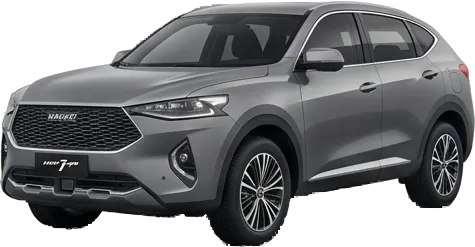
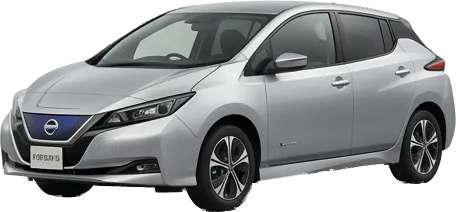
Haval F7 1.5 GDIT (150 Hp) 4WD DCT vs Nissan Leaf 40 kWh (150 Hp)
Compare up to three variants side by side. Add cars from specs pages or pick a model below.
No cars in comparison yet
Open a model specs page and tap Compare, or browse the catalog to add a car.
Browse cars| Specification | 1.5 GDIT (150 Hp) 4WD DCT | 40 kWh (150 Hp) | — |
|---|---|---|---|
| Overview | |||
| Generation | Gen 1 Facelift 1 | Gen 2 | — |
| Year | 2022–2024 | 2017–2025 | — |
| Platform | Great Wall | Nissan Leaf | — |
| Variant | 1.5 GDIT (150 Hp) 4WD DCT | 40 kWh (150 Hp) | — |
| Body type | Coupe Crossover | hatchback | — |
| Engine type | Fuel | Electric | — |
| Fuel type | Petrol | Electric | — |
| Seats | 5 | 5 | — |
| Doors | 5 | 5 | — |
| Emission standard | Euro 5 | — | — |
| Power & torque | |||
| Power | 150 HP | — | — |
| Power @ min rpm | 5000 rpm | — | — |
| Power @ max rpm | 5600 rpm | — | — |
| Torque | 280 Nm (207 lb-ft) | — | — |
| Torque @ min rpm | 1400 rpm | — | — |
| Torque @ max rpm | 3000 rpm | — | — |
| Engine | |||
| Engine code | GW4G15K | EM57 | — |
| Displacement | 1499 cc | — | — |
| Cylinders | 4 | — | — |
| Configuration | inline | — | — |
| Bore | 76 mm (3 in) | — | — |
| Stroke | 83 mm (3.3 in) | — | — |
| Compression ratio | 11 | — | — |
| Valves per cylinder | 4 | — | — |
| Injection system | Direct Injection | — | — |
| Aspiration | Turbocharger Intercooler | — | — |
| Valvetrain | dohc | — | — |
| Engine layout | Front Transverse | — | — |
| Engine systems | Start Stop System | — | — |
| Drivetrain & transmission | |||
| Drive | All wheel drive (4x4) | Front Wheel Drive | — |
| Powertrain architecture | Internal Combustion Engine | Bev Electric Vehicle | — |
| Drivetrain architecture | The Internal Combustion Engine Ice Drives The Front Wheels Permanently And The Rear Wheels Are Driven Through An Electrically Or Mechanically Operated Clutch If Necessary | One Electric Motor Drives The Front Wheels | — |
| Gearbox type | dct | fixed_gear | — |
| Gears | 7 | 1 | — |
| Gearbox code | 7dct | single_speed_fixed_gear | — |
| Gearbox manufacturer | hycet | nissan | — |
| Dimensions | |||
| Length | 4,691 mm (184.7 in) | 4,490 mm (176.8 in) | — |
| Width | 1,866 mm (73.5 in) | 1,788 mm (70.4 in) | — |
| Height | 1,660 mm (65.4 in) | 1,530 mm (60.2 in) | — |
| Wheelbase | 2,725 mm (107.3 in) | 2,700 mm (106.3 in) | — |
| Ground clearance | 190 mm (7.5 in) | 155 mm (6.1 in) | — |
| Front track | — | 1,530 mm (60.2 in) | — |
| Rear track | — | 1,545 mm (60.8 in) | — |
| Boot space | — | 435 L (15.4 cu ft) | — |
| Turning circle | — | 10.6 m | — |
| Mass | |||
| Kerb weight | 1,720 kg (3,792 lbs) | 1,505 kg (3,318 lbs) | — |
| Max weight | — | 1,995 kg (4,398 lbs) | — |
| Max load | — | 490 kg (1,080 lbs) | — |
| Consumption & emissions | |||
| Fuel combined | 8.4 L/100 km (28 US MPG) | — | — |
| Fuel tank | 56.0 L (14.8 US gal) | — | — |
| Chassis & brakes | |||
| Front suspension | Independent Type Mcpherson | Independent Type Mcpherson | — |
| Rear suspension | Double Wishbone | torsion | — |
| Front brakes | Ventilated Discs | Ventilated discs, 283x28 mm | — |
| Rear brakes | disc | Ventilated discs, 292x16 mm | — |
| Steering type | Steering Rack And Pinion | Steering Rack And Pinion | — |
| Power steering | Electric Steering | Electric Steering | — |
| Tire size | 235/55 R19 | 205/55 R16; 215/50 R17 | — |
| Wheel rims | 7.5J x 19 ET50 | 6.5J x 16; 7J x 17 | — |
| Assisting systems | Abs Anti Lock Braking System | Abs Anti Lock Braking System | — |
| Efficiency ratios | |||
| Weight-to-power | 11.5 kg/Hp, 87.2 Hp/tonne | 10 kg/Hp, 99.7 Hp/tonne | — |
| Weight-to-torque | 6.1 kg/Nm, 162.8 Nm/tonne | 4.7 kg/Nm, 212.6 Nm/tonne | — |
| Max roof load | — | 35 kg (77 lbs) | — |
| Other | |||
| Start Of Production | 2022 | 2017 | — |
| End Of Production | 2024 | 2025 | — |
| Length In | 184.7 | 176.8 | — |
| Width In | 73.5 | 70.4 | — |
| Height In | 65.4 | 60.2 | — |
| Wheelbase In | 107.3 | 106.3 | — |
| Ride Height Ground Clearance In | 7.5 | 6.1 | — |
| Kerb Weight Lbs | 3792 | 3318 | — |
| Torque Lbft | 207 | — | — |
| Fuel Tank Capacity Gal | 14.8 | — | — |
| Fuel Economy Combined Mpg Us | 28 | — | — |
| Width Including Mirrors | — | 2030 | — |
| Front Overhang | — | 1005 | — |
| Rear Overhang | — | 785 | — |
| Maximum Speed Mph | — | 89 | — |
| Front Track In | — | 60.2 | — |
| Rear Back Track In | — | 60.8 | — |
| Width Including Mirrors In | — | 79.9 | — |
| Max Weight Lbs | — | 4398 | — |
| Max Load Lbs | — | 1080 | — |
| Trunk Boot Space Min Cuft | — | 15.4 | — |
| Electric Range Wltp Mi | — | 168 | — |
| Electric Range Nedc Mi | — | 235 | — |
| Performance | |||
| Top speed | — | 144 km/h (89 mph) | — |
| 0–100 km/h | — | 7.9 s (0-60 mph: ~7.5 s) | — |
| 0–62 mph | — | 7.9 s (0-60 mph: ~7.5 s) | — |
| 0–60 mph | — | 7.5 s | — |
| Electric / hybrid | |||
| Battery capacity (gross) | — | 40.0 kWh | — |
| Battery capacity (net) | — | 36.0 kWh | — |
| Electric range (WLTP) | — | 270 km (168 mi) | — |
| Electric range (NEDC) | — | 378 km (235 mi) | — |
| Electric motor power | — | 150 HP | — |
| Electric motor torque | — | 320 Nm (236 lb-ft) | — |
| Energy consumption (WLTP) | — | 20.6 kWh/100km | — |