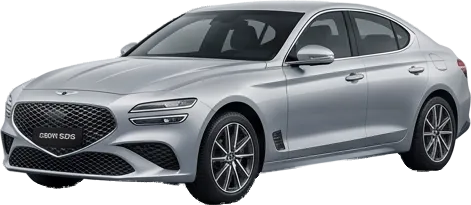
Genesis G70 Sport 3.3 T-GDi V6 (370 Hp) Automatic vs Genesis G70 2.0 T-GDi (252 Hp) Automatic
Compare up to three variants side by side. Add cars from specs pages or pick a model below.
No cars in comparison yet
Open a model specs page and tap Compare, or browse the catalog to add a car.
Browse cars| Specification | Sport 3.3 T-GDi V6 (370 Hp) Automatic | 2.0 T-GDi (252 Hp) Automatic | — |
|---|---|---|---|
| Overview | |||
| Generation | Gen 1 | Gen 1 | — |
| Year | 2017–2020 | 2017–2020 | — |
| Platform | Hyundai-Kia M3 | Hyundai-Kia M3 | — |
| Variant | Sport 3.3 T-GDi V6 (370 Hp) Automatic | 2.0 T-GDi (252 Hp) Automatic | — |
| Body type | sedan | sedan | — |
| Engine type | Fuel | Fuel | — |
| Fuel type | Petrol | Petrol | — |
| Seats | 5 | 5 | — |
| Doors | 4 | 4 | — |
| Power & torque | |||
| Power | 370 HP | 252 HP | — |
| Power @ max rpm | 6000 rpm | 6200 rpm | — |
| Torque | 520 Nm (384 lb-ft) | 360 Nm (266 lb-ft) | — |
| Torque @ min rpm | 1300 rpm | 1400 rpm | — |
| Torque @ max rpm | 4500 rpm | 4000 rpm | — |
| Engine | |||
| Engine code | G6DP | G4KL | — |
| Displacement | 3342 cc | 1998 cc | — |
| Cylinders | 6 | 4 | — |
| Configuration | V Engine | inline | — |
| Compression ratio | 10 | 10 | — |
| Injection system | Direct Injection | Direct Injection | — |
| Aspiration | Turbocharger Intercooler | Turbocharger Intercooler | — |
| Oil capacity | 6.9 L | 5.7 L | — |
| Coolant | 9.3 L | 7.3 L | — |
| Engine layout | Front Longitudinal | Front Longitudinal | — |
| Drivetrain & transmission | |||
| Drive | Rear Wheel Drive | Rear Wheel Drive | — |
| Powertrain architecture | Internal Combustion Engine | Internal Combustion Engine | — |
| Drivetrain architecture | The Internal Combustion Engine Ice Drives The Rear Wheels Of The Vehicle | The Internal Combustion Engine Ice Drives The Rear Wheels Of The Vehicle | — |
| Gearbox type | torque_converter | torque_converter | — |
| Gears | 8 | 8 | — |
| Gearbox code | powertech_8r | powertech_8r | — |
| Gearbox manufacturer | hyundai | hyundai | — |
| Dimensions | |||
| Length | 4,685 mm (184.4 in) | 4,685 mm (184.4 in) | — |
| Width | 1,850 mm (72.8 in) | 1,850 mm (72.8 in) | — |
| Height | 1,400 mm (55.1 in) | 1,400 mm (55.1 in) | — |
| Wheelbase | 2,835 mm (111.6 in) | 2,835 mm (111.6 in) | — |
| Front track | 1,596 mm (62.8 in) | 1,596 mm (62.8 in) | — |
| Rear track | 1,604 mm (63.1 in) | 1,632 mm (64.3 in) | — |
| Mass | |||
| Kerb weight | 1,705 kg (3,759 lbs) | 1,595 kg (3,516 lbs) | — |
| Kerb weight (min) | — | 1,595 kg (3,516 lbs) | — |
| Kerb weight (max) | — | 1,630 kg (3,594 lbs) | — |
| Consumption & emissions | |||
| Fuel combined | 11.1 L/100 km (21.2 US MPG) | 9.3 L/100 km (25.3 US MPG) | — |
| Fuel urban | 12.6 L/100 km (18.7 US MPG) | 10.6 L/100 km (22.2 US MPG) | — |
| Fuel extra urban | 9.4 L/100 km (25 US MPG) | 7.8 L/100 km (30.2 US MPG) | — |
| CO₂ emissions | 188 g/km | 156 g/km | — |
| Fuel tank | 60.0 L (15.9 US gal) | 60.0 L (15.9 US gal) | — |
| Chassis & brakes | |||
| Tire size | 225/40 R19; 255/35 R19 | 225/45 R18; 225/40 R19; 255/35 R19 | — |
| Wheel rims | 19 | 18; 19 | — |
| Assisting systems | Abs Anti Lock Braking System | Abs Anti Lock Braking System | — |
| Efficiency ratios | |||
| Weight-to-power | 4.6 kg/Hp, 217 Hp/tonne | 6.3 kg/Hp, 158 Hp/tonne | — |
| Weight-to-torque | 3.3 kg/Nm, 305 Nm/tonne | 4.4 kg/Nm, 225.7 Nm/tonne | — |
| Other | |||
| Start Of Production | 2017 | 2017 | — |
| End Of Production | 2020 | 2020 | — |
| Front Overhang | 805 | 805 | — |
| Rear Overhang | 1045 | 1045 | — |
| Length In | 184.4 | 184.4 | — |
| Width In | 72.8 | 72.8 | — |
| Height In | 55.1 | 55.1 | — |
| Wheelbase In | 111.6 | 111.6 | — |
| Front Track In | 62.8 | 62.8 | — |
| Rear Back Track In | 63.1 | 64.3 | — |
| Kerb Weight Lbs | 3759 | 3516 | — |
| Torque Lbft | 384 | 266 | — |
| Fuel Tank Capacity Gal | 15.9 | 15.9 | — |
| Fuel Economy Combined Mpg Us | 21.2 | 25.3 | — |