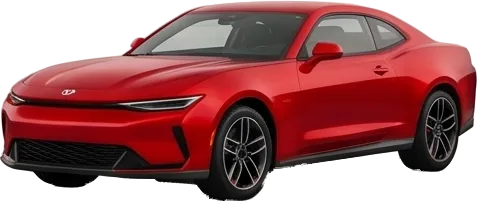
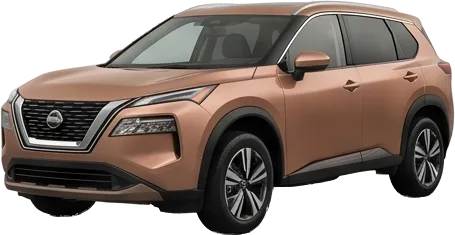
Ford Capri EV 52 kWh (170 Hp) Standard Range vs Nissan Ariya 65 kWh (218 Hp)
Compare up to three variants side by side. Add cars from specs pages or pick a model below.
No cars in comparison yet
Open a model specs page and tap Compare, or browse the catalog to add a car.
Browse cars| Specification | 52 kWh (170 Hp) Standard Range | 65 kWh (218 Hp) | — |
|---|---|---|---|
| Overview | |||
| Generation | Gen 1 | Gen 1 | — |
| Year | 2024–2026 | 2021–present | — |
| Platform | VW MEB / MEB | Nissan CMF-EV | — |
| Variant | 52 kWh (170 Hp) Standard Range | 65 kWh (218 Hp) | — |
| Body type | Coupe Suv | Coupe Suv | — |
| Engine type | Electric | Electric | — |
| Fuel type | Electric | Electric | — |
| Seats | 5 | 5 | — |
| Doors | 5 | 5 | — |
| Performance | |||
| Top speed | 160 km/h (99 mph) | 160 km/h (99 mph) | — |
| 0–100 km/h | 8.7 s (0-60 mph: ~8.3 s) | 7.5 s (0-60 mph: ~7.1 s) | — |
| 0–62 mph | 8.7 s (0-60 mph: ~8.3 s) | 7.5 s (0-60 mph: ~7.1 s) | — |
| 0–60 mph | 8.3 s | 7.1 s | — |
| Engine | |||
| Engine code | APP310 | AM67 | — |
| Drivetrain & transmission | |||
| Drive | Rear Wheel Drive | Front Wheel Drive | — |
| Powertrain architecture | Bev Electric Vehicle | Bev Electric Vehicle | — |
| Drivetrain architecture | One Electric Motor Drives The Rear Wheels | One Electric Motor Drives The Front Wheels | — |
| Gearbox type | reduction_gear | fixed_gear | — |
| Gears | 1 | 1 | — |
| Gearbox code | 1ed | single_speed_fixed_gear | — |
| Gearbox manufacturer | ford | nissan | — |
| Dimensions | |||
| Length | 4,634 mm (182.4 in) | 4,595 mm (180.9 in) | — |
| Width | 1,872 mm (73.7 in) | 1,850 mm (72.8 in) | — |
| Height | 1,626 mm (64 in) | 1,660 mm (65.4 in) | — |
| Wheelbase | 2,767 mm (108.9 in) | 2,775 mm (109.3 in) | — |
| Front track | 1,581 mm (62.2 in) | — | — |
| Rear track | 1,571 mm (61.9 in) | — | — |
| Boot space | 627 – 1510 L (22.1 – 53.3 cu ft) | 466 L (16.5 cu ft) | — |
| Ground clearance | 135 mm (5.3 in) | — | — |
| Turning circle | 9.7 m | — | — |
| Mass | |||
| Kerb weight | 1,914 kg (4,220 lbs) | — | — |
| Kerb weight (min) | 1,914 kg (4,220 lbs) | — | — |
| Kerb weight (max) | 1,930 kg (4,255 lbs) | — | — |
| Max weight | 2,500 kg (5,512 lbs) | — | — |
| Max load | 570 kg (1,257 lbs) | — | — |
| Chassis & brakes | |||
| Steering type | Steering Rack And Pinion | — | — |
| Power steering | Electric Steering | — | — |
| Tire size | Front wheel tires: 235/55 R19; 235/50 R20Rear wheel tires: 255/50 R19; 255/45 R20 | 235/55 R19; 255/45 R20 | — |
| Wheel rims | Front wheel rims: 19; 20Rear wheel rims: 19; 20 | 19; 20 | — |
| Assisting systems | Abs Anti Lock Braking System | — | — |
| Rear suspension | — | Independent Multi Link Suspension | — |
| Efficiency ratios | |||
| Weight-to-power | 11.3 kg/Hp, 88.8 Hp/tonne | — | — |
| Weight-to-torque | 6.2 kg/Nm, 162 Nm/tonne | — | — |
| Max roof load | 75 kg (165 lbs) | — | — |
| Electric / hybrid | |||
| Battery capacity (gross) | 52.0 kWh | 65.0 kWh | — |
| Electric range (WLTP) | 374 km (232 mi) | 359 km (223 mi) | — |
| Electric motor power | 170 HP | 218 HP | — |
| Electric motor torque | 310 Nm (229 lb-ft) | 300 Nm (221 lb-ft) | — |
| Energy consumption (WLTP) | 15.5 kWh/100km | — | — |
| Other | |||
| Start Of Production | 2024 | 2021 | — |
| End Of Production | 2026 | — | — |
| Width Including Mirrors | 2063 | — | — |
| Width With Mirrors Folded | 1946 | — | — |
| Front Overhang | 889 | — | — |
| Rear Overhang | 978 | — | — |
| Maximum Speed Mph | 99 | 99 | — |
| Length In | 182.4 | 180.9 | — |
| Width In | 73.7 | 72.8 | — |
| Height In | 64 | 65.4 | — |
| Wheelbase In | 108.9 | 109.3 | — |
| Front Track In | 62.2 | — | — |
| Rear Back Track In | 61.9 | — | — |
| Ride Height Ground Clearance In | 5.3 | — | — |
| Width Including Mirrors In | 81.2 | — | — |
| Width With Mirrors Folded In | 76.6 | — | — |
| Kerb Weight Lbs | 4220 | — | — |
| Max Weight Lbs | 5512 | — | — |
| Max Load Lbs | 1257 | — | — |
| Trunk Boot Space Min Cuft | 22.1 | 16.5 | — |
| Trunk Boot Space Max Cuft | 53.3 | — | — |
| Electric Range Wltp Mi | 232 | 223 | — |