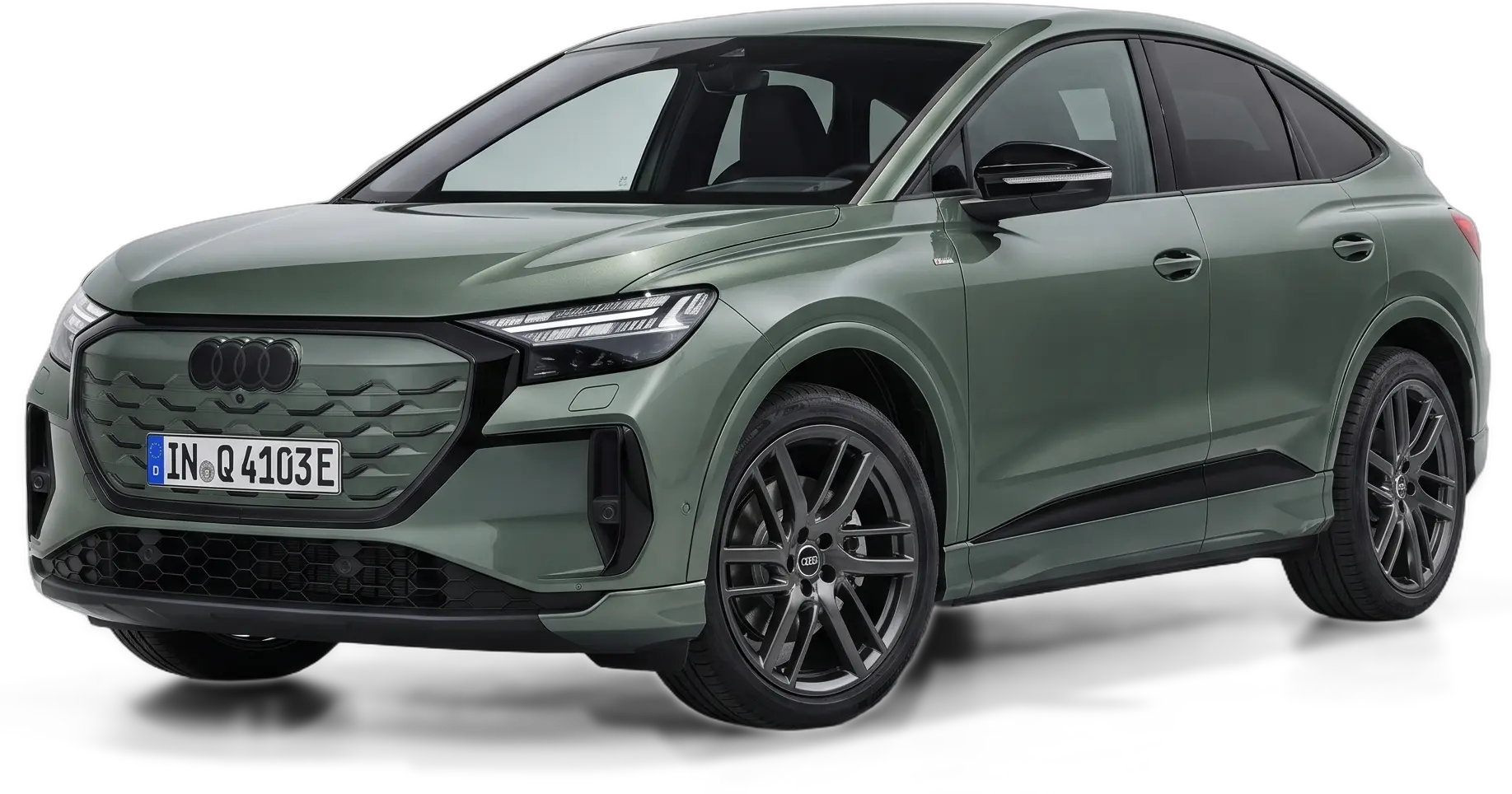
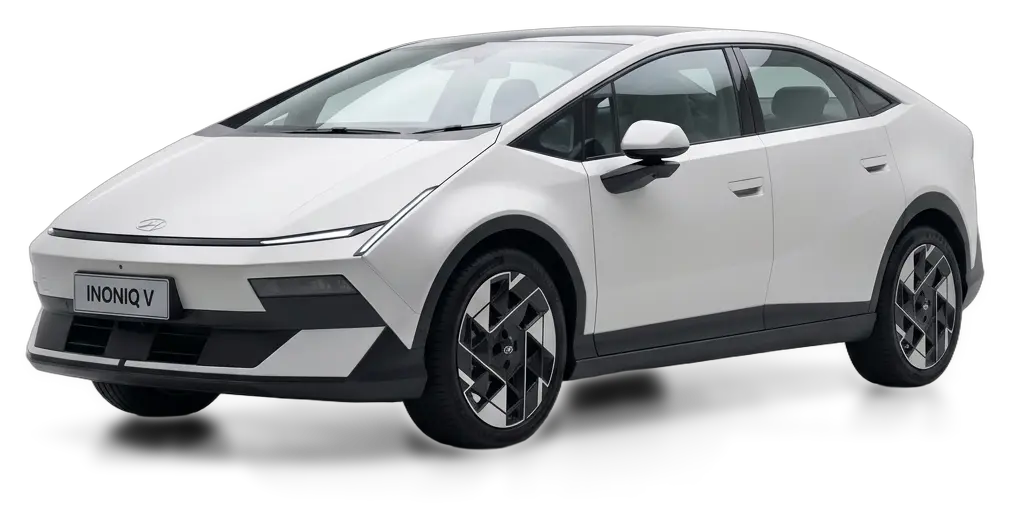
Audi Q4 e-tron performance 84 kWh (286 Hp) vs Hyundai IONIQ V 53.48 kWh (190 Hp)
Compare up to three variants side by side. Add cars from specs pages or pick a model below.
No cars in comparison yet
Open a model specs page and tap Compare, or browse the catalog to add a car.
Browse cars| Specification | performance 84 kWh (286 Hp) | 53.48 kWh (190 Hp) | — |
|---|---|---|---|
| Overview | |||
| Generation | Gen 1 Facelift 1 | Gen 1 | — |
| Year | 2026–present | 2026–present | — |
| Platform | VW MEB / MEB | Hyundai-Kia E-GMP | — |
| Variant | performance 84 kWh (286 Hp) | 53.48 kWh (190 Hp) | — |
| Body type | Fastback | Fastback | — |
| Engine type | Electric | Electric | — |
| Fuel type | Electric | Electric | — |
| Seats | 5 | 5 | — |
| Doors | 5 | 4 | — |
| Power & torque | |||
| Power | 286 HP | 190 HP | — |
| Torque | 545 Nm (402 lb-ft) | 250 Nm (184 lb-ft) | — |
| Performance | |||
| Top speed | 180 km/h (112 mph) | 165 km/h (103 mph) | — |
| 0–100 km/h | 6.6 s (0-60 mph: ~6.3 s) | 7.9 s (0-60 mph: ~7.5 s) | — |
| 0–62 mph | 6.6 s (0-60 mph: ~6.3 s) | 7.9 s (0-60 mph: ~7.5 s) | — |
| 0–60 mph | 6.3 s | 7.5 s | — |
| Engine | |||
| Engine code | APP550 | CF4B | — |
| Drivetrain & transmission | |||
| Drive | Rear wheel drive | Front wheel drive | — |
| Powertrain architecture | BEV (Electric Vehicle) | BEV (Electric Vehicle) | — |
| Drivetrain architecture | One electric motor drives the rear wheels. | One electric motor drives the front wheels. | — |
| Gearbox type | electric | electric | — |
| Gears | 1 | 1 | — |
| Gearbox code | Electric Drive | Electric Drive | — |
| Gearbox manufacturer | aiways | aiways | — |
| Dimensions | |||
| Length | 4,603 mm (181.2 in) | 4,900 mm (192.9 in) | — |
| Width | 1,865 mm (73.4 in) | 1,890 mm (74.4 in) | — |
| Height | 1,614 mm (63.5 in) | 1,470 mm (57.9 in) | — |
| Wheelbase | 2,765 mm (108.9 in) | 2,900 mm (114.2 in) | — |
| Front track | 1,587 mm (62.5 in) | 1,646 mm (64.8 in) | — |
| Rear track | 1,563 mm (61.5 in) | 1,657 mm (65.2 in) | — |
| Boot space | 527 – 1460 L (18.6 – 51.6 cu ft) | 465 L (16.4 cu ft) | — |
| Turning circle | 10.2 m | — | — |
| Mass | |||
| Kerb weight | 2,090 kg (4,608 lbs) | 1,707 kg (3,763 lbs) | — |
| Max weight | 2,690 kg (5,930 lbs) | 2,150 kg (4,740 lbs) | — |
| Max load | 600 kg (1,323 lbs) | 443 kg (977 lbs) | — |
| Chassis & brakes | |||
| Front suspension | Independent, McPherson type with coil spring and anti-roll bar | Independent, McPherson type with coil spring and anti-roll bar | — |
| Rear suspension | Independent multi-link spring suspension with anti-roll bar | Coil spring, Torsion bar | — |
| Front brakes | Ventilated discs | Ventilated discs | — |
| Rear brakes | Drum | Disc | — |
| Steering type | Steering rack and pinion | Steering rack and pinion | — |
| Power steering | Electric Steering | Electric Steering | — |
| Tire size | Front wheel tires: 235/55 R19 Rear wheel tires: 255/50 R19 | 215/55 R17; 235/45 R19 | — |
| Wheel rims | 8J x 19 | 17; 19 | — |
| Assisting systems | ABS (Anti-lock braking system) | ABS (Anti-lock braking system) | — |
| Efficiency ratios | |||
| Weight-to-power | 7.3 | 9 | — |
| Weight-to-torque | 3.8 | 6.8 | — |
| Drag coefficient | 0.26 Cd | 0.23 Cd | — |
| Max roof load | 75 kg (165 lbs) | — | — |
| Electric / hybrid | |||
| Battery capacity (gross) | 84.0 kWh | 53.5 kWh | — |
| Battery capacity (net) | 79.0 kWh | — | — |
| Electric range (WLTP) | 513 km (319 mi) | 421 km (262 mi) | — |
| Electric motor power | 286 HP | 190 HP | — |
| Electric motor torque | 545 Nm (402 lb-ft) | 250 Nm (184 lb-ft) | — |
| Energy consumption (WLTP) | 15.2 kWh/100km | — | — |
| Other | |||
| Start Of Production | 2026 | 2026 | — |
| Width Including Mirrors | 2108 | — | — |
| Front Overhang | 862 | — | — |
| Rear Overhang | 976 | — | — |
| Electric Motors | [{"location":"rear","power":null,"torque":null,"engine_id":901}] | — | — |
| Maximum Speed Mph | 112 | 103 | — |
| Length In | 181.2 | 192.9 | — |
| Width In | 73.4 | 74.4 | — |
| Height In | 63.5 | 57.9 | — |
| Wheelbase In | 108.9 | 114.2 | — |
| Front Track In | 62.5 | 64.8 | — |
| Rear Back Track In | 61.5 | 65.2 | — |
| Width Including Mirrors In | 83 | — | — |
| Kerb Weight Lbs | 4608 | 3763 | — |
| Max Weight Lbs | 5930 | 4740 | — |
| Max Load Lbs | 1323 | 977 | — |
| Torque Lbft | 402 | 184 | — |
| Trunk Boot Space Min Cuft | 18.6 | 16.4 | — |
| Trunk Boot Space Max Cuft | 51.6 | — | — |
| Electric Range Wltp Mi | 319 | 262 | — |