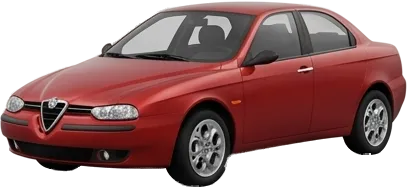
Alfa Romeo 156 2.0 JTS (165 Hp) vs Alfa Romeo 156 2.0 16V Twin Spark (155 Hp)
Compare up to three variants side by side. Add cars from specs pages or pick a model below.
No cars in comparison yet
Open a model specs page and tap Compare, or browse the catalog to add a car.
Browse cars| Specification | 2.0 JTS (165 Hp) | 2.0 16V Twin Spark (155 Hp) | — |
|---|---|---|---|
| Overview | |||
| Generation | Gen 1 | Gen 1 | — |
| Year | 2001–2003 | 2000–2003 | — |
| Platform | Fiat Type Two / Fiat Tipo 2 rev. 3 | Fiat Type Two / Fiat Tipo 2 rev. 3 | — |
| Variant | 2.0 JTS (165 Hp) | 2.0 16V Twin Spark (155 Hp) | — |
| Body type | Station Wagon Estate | Station Wagon Estate | — |
| Engine type | Fuel | Fuel | — |
| Fuel type | Petrol | Petrol | — |
| Seats | 5 | 5 | — |
| Doors | 5 | 5 | — |
| Power & torque | |||
| Power | 165 HP | 155 HP | — |
| Power @ max rpm | 6400 rpm | 6500 rpm | — |
| Torque | 206 Nm (152 lb-ft) | 187 Nm (138 lb-ft) | — |
| Torque @ max rpm | 3250 rpm | 3800 rpm | — |
| Performance | |||
| Top speed | 220 km/h (137 mph) | 216 km/h (134 mph) | — |
| 0–100 km/h | 8.3 s (0-60 mph: ~7.9 s) | 8.8 s (0-60 mph: ~8.4 s) | — |
| 0–62 mph | 8.3 s (0-60 mph: ~7.9 s) | 8.8 s (0-60 mph: ~8.4 s) | — |
| 0–60 mph | 7.9 s | 8.4 s | — |
| Engine | |||
| Engine code | 937A1000 | 32301 | — |
| Displacement | 1970 cc | 1970 cc | — |
| Cylinders | 4 | 4 | — |
| Configuration | inline | inline | — |
| Bore | 83 mm (3.3 in) | 83 mm (3.3 in) | — |
| Stroke | 91 mm (3.6 in) | 91 mm (3.6 in) | — |
| Compression ratio | 11.3 | 10 | — |
| Valves per cylinder | 4 | 4 | — |
| Injection system | Direct Injection | Multi Port Manifold Injection | — |
| Aspiration | Naturally Aspirated Engine | Naturally Aspirated Engine | — |
| Oil capacity | 4.4 L | 4.4 L | — |
| Coolant | 6.9 L | 6.9 L | — |
| Engine layout | Front Transverse | Front Transverse | — |
| Valvetrain | — | dohc | — |
| Drivetrain & transmission | |||
| Drive | Front Wheel Drive | Front Wheel Drive | — |
| Powertrain architecture | Internal Combustion Engine | Internal Combustion Engine | — |
| Drivetrain architecture | The Internal Combustion Engine Ice Drives The Front Wheels Of The Vehicle | The Internal Combustion Engine Ice Drives The Front Wheels Of The Vehicle | — |
| Gearbox type | manual | manual | — |
| Gears | 5 | 5 | — |
| Gearbox code | c510 | c510 | — |
| Gearbox manufacturer | fpt | fpt | — |
| Dimensions | |||
| Length | 4,430 mm (174.4 in) | 4,430 mm (174.4 in) | — |
| Width | 1,755 mm (69.1 in) | 1,745 mm (68.7 in) | — |
| Height | 1,420 mm (55.9 in) | 1,420 mm (55.9 in) | — |
| Wheelbase | 2,595 mm (102.2 in) | 2,595 mm (102.2 in) | — |
| Front track | 1,507 mm (59.3 in) | 1,511 mm (59.5 in) | — |
| Rear track | 1,494 mm (58.8 in) | 1,498 mm (59 in) | — |
| Boot space | 360 – 1180 L (12.7 – 41.7 cu ft) | 360 – 1180 L (12.7 – 41.7 cu ft) | — |
| Mass | |||
| Kerb weight | 1,335 kg (2,943 lbs) | 1,300 kg (2,866 lbs) | — |
| Max weight | 1,815 kg (4,001 lbs) | 1,820 kg (4,012 lbs) | — |
| Max load | 480 kg (1,058 lbs) | 520 kg (1,146 lbs) | — |
| Consumption & emissions | |||
| Fuel urban | 12.2 L/100 km (19.3 US MPG) | 12.2 L/100 km (19.3 US MPG) | — |
| Fuel extra urban | 6.8 L/100 km (34.6 US MPG) | 6.8 L/100 km (34.6 US MPG) | — |
| Fuel tank | 63.0 L (16.6 US gal) | 63.0 L (16.6 US gal) | — |
| Chassis & brakes | |||
| Front suspension | Double Wishbone | Double Wishbone | — |
| Rear suspension | Several Levers And Rods | Several Levers And Rods | — |
| Front brakes | Ventilated Discs | Ventilated Discs | — |
| Rear brakes | disc | disc | — |
| Steering type | Steering Rack And Pinion | Steering Rack And Pinion | — |
| Power steering | Hydraulic Steering | Hydraulic Steering | — |
| Tire size | 205/65 R15 | 205/60R15 | — |
| Assisting systems | Abs Anti Lock Braking System | Abs Anti Lock Braking System | — |
| Efficiency ratios | |||
| Weight-to-power | 8.1 kg/Hp, 123.6 Hp/tonne | 8.4 kg/Hp, 119.2 Hp/tonne | — |
| Weight-to-torque | 6.5 kg/Nm, 154.3 Nm/tonne | 7 kg/Nm, 143.8 Nm/tonne | — |
| Other | |||
| Start Of Production | 2001 | 2000 | — |
| End Of Production | 2003 | 2003 | — |
| Maximum Speed Mph | 137 | 134 | — |
| Length In | 174.4 | 174.4 | — |
| Width In | 69.1 | 68.7 | — |
| Height In | 55.9 | 55.9 | — |
| Wheelbase In | 102.2 | 102.2 | — |
| Front Track In | 59.3 | 59.5 | — |
| Rear Back Track In | 58.8 | 59 | — |
| Kerb Weight Lbs | 2943 | 2866 | — |
| Max Weight Lbs | 4001 | 4012 | — |
| Max Load Lbs | 1058 | 1146 | — |
| Torque Lbft | 152 | 138 | — |
| Trunk Boot Space Min Cuft | 12.7 | 12.7 | — |
| Trunk Boot Space Max Cuft | 41.7 | 41.7 | — |
| Fuel Tank Capacity Gal | 16.6 | 16.6 | — |