
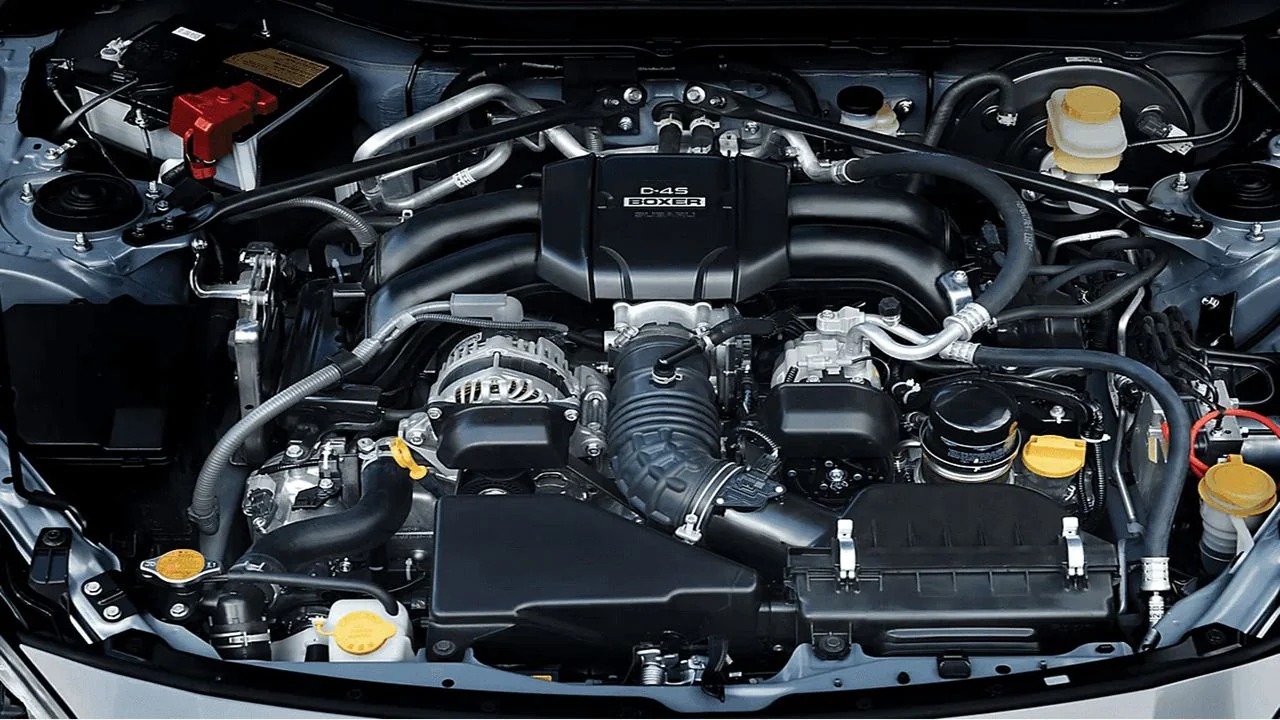
Subaru is working on a new boxer engine targeting a thermal efficiency of 50%, a significant jump from the current mark of around 41% seen in engines like Toyota’s 2.0 Dynamic Force. The Japanese automaker remains committed to its signature horizontally opposed engine layout but faces challenges in reaching this ambitious goal.
Balancing Efficiency and Power in a Boxer Engine
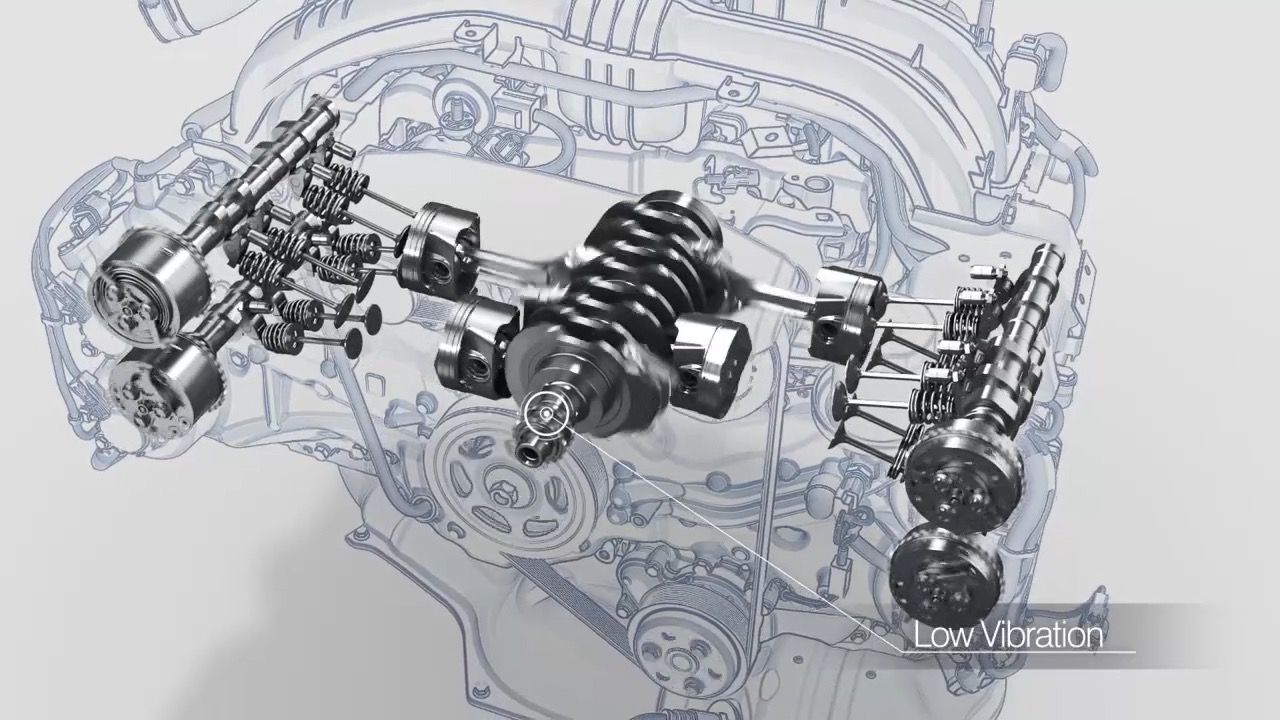
The boxer engine is well-known for its low centre of gravity and smooth operation, traits Subaru and enthusiasts appreciate. However, this engine layout has inherent challenges when it comes to pushing thermal efficiency and power at the same time. Usually, improving fuel efficiency comes at the cost of engine power, and boosting power tends to reduce efficiency.
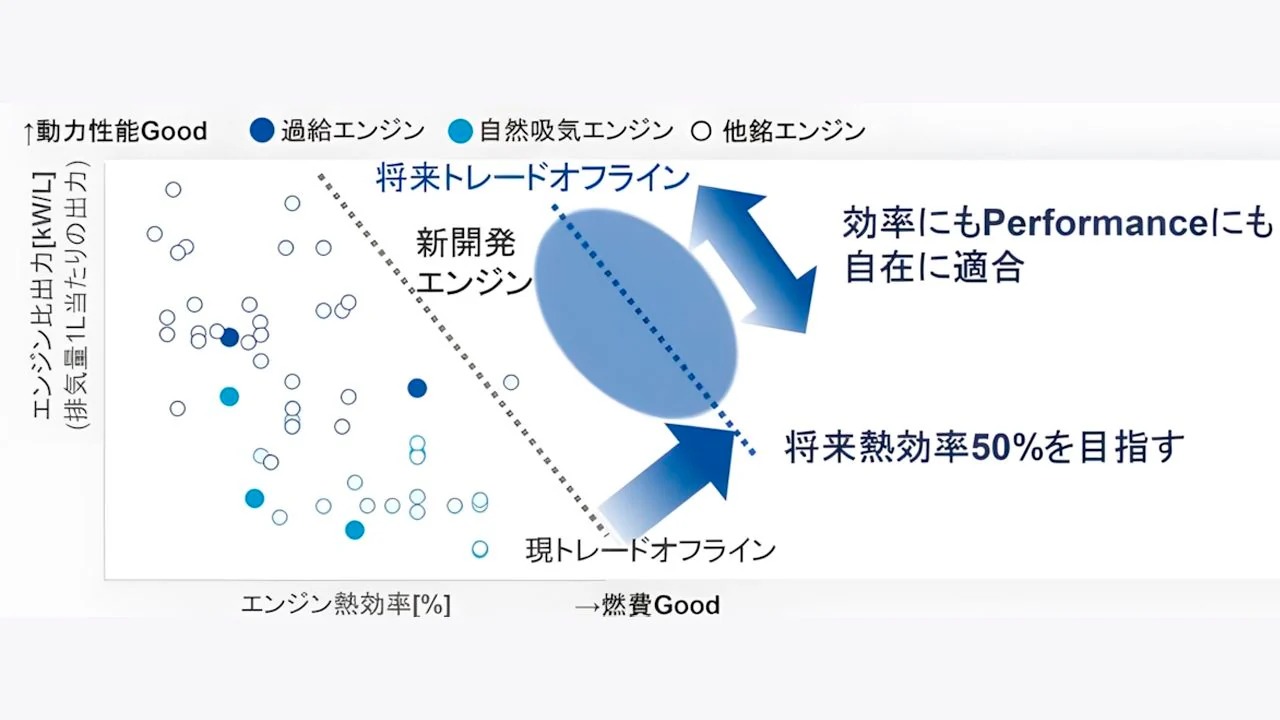
Subaru’s engineers illustrated this tension by showing a graph where increasing thermal efficiency typically lowers specific power output (horsepower per litre). Their goal is to shift this relationship, achieving better efficiency without sacrificing performance, mainly through advanced turbocharging and improved combustion techniques.
Innovations to Overcome Boxer Engine Limitations
Traditionally, longer piston strokes improve efficiency by reducing heat loss in combustion. But because boxer engines are wide, lengthening the stroke would make the engine and vehicle wider, which Subaru wants to avoid for design and packaging reasons.
Instead, Subaru aims to maintain a shorter stroke but increase the speed and quality of air-fuel mixture flow inside the cylinders. They plan to use a cylinder head design with a straighter and narrower intake passage to speed up the airflow, producing a more uniform mix that burns cleaner and more efficiently. This setup depends heavily on forced induction, which Subaru plans to provide via a variable geometry turbocharger (VGT) to improve responsiveness and control.
Subaru also uses advanced 3D combustion analysis to optimize flame propagation and reduce knocking. This helps release heat faster during the combustion cycle, improving how effectively fuel energy turns into mechanical power. Early results suggest the engine could maintain high efficiency over a broader range of conditions, not just at ideal cruising points.
Additional Technologies Considered
Subaru is exploring several other technologies alongside the VGT:
- Miller cycle: Adjusting intake valve timing to reduce compression temperature and easing turbocharger requirements.
- Assisted turbocharging: Possibly using an electric motor to minimize turbo lag.
- Pre-chamber combustion: A small ignition chamber enhances combustion of lean air-fuel mixtures, which is critical for reaching high efficiency. This setup ignites a richer mixture in the pre-chamber, sending flames into the main combustion area for cleaner burning.
Despite these efforts, Subaru admits that surpassing 50% thermal efficiency will be very difficult with conventional methods alone.
Uncertain Timeline and Application
Subaru has not shared details on when this new boxer engine might enter production or which model might use it first. The 50% efficiency target remains a goal rather than a confirmed achievement.
Previous claims from other brands, like Nissan’s e-Power system which announced a similar figure in 2021, have not fully translated into production engines achieving those numbers in real-world, full-range operation. Given the boxer’s packaging challenges and need to work efficiently across all driving conditions, Subaru’s task is particularly tough.
Nevertheless, this project shows Subaru’s continued dedication to refining its traditional engine design amid growing electrification trends, especially as it shifts to electric vehicles in markets such as Europe.
Source: motor.es

Software Developer & Tech Journalist. Creator of Autodatalog.com. Experienced in Python, PHP, PostgreSQL, and Android system modifications. Whether I'm writing Python automation scripts, or exploring the technical specs of Fiat/Alfa Romeo engines, I love reverse-engineering how things work. Based in Istanbul, Turkey.