
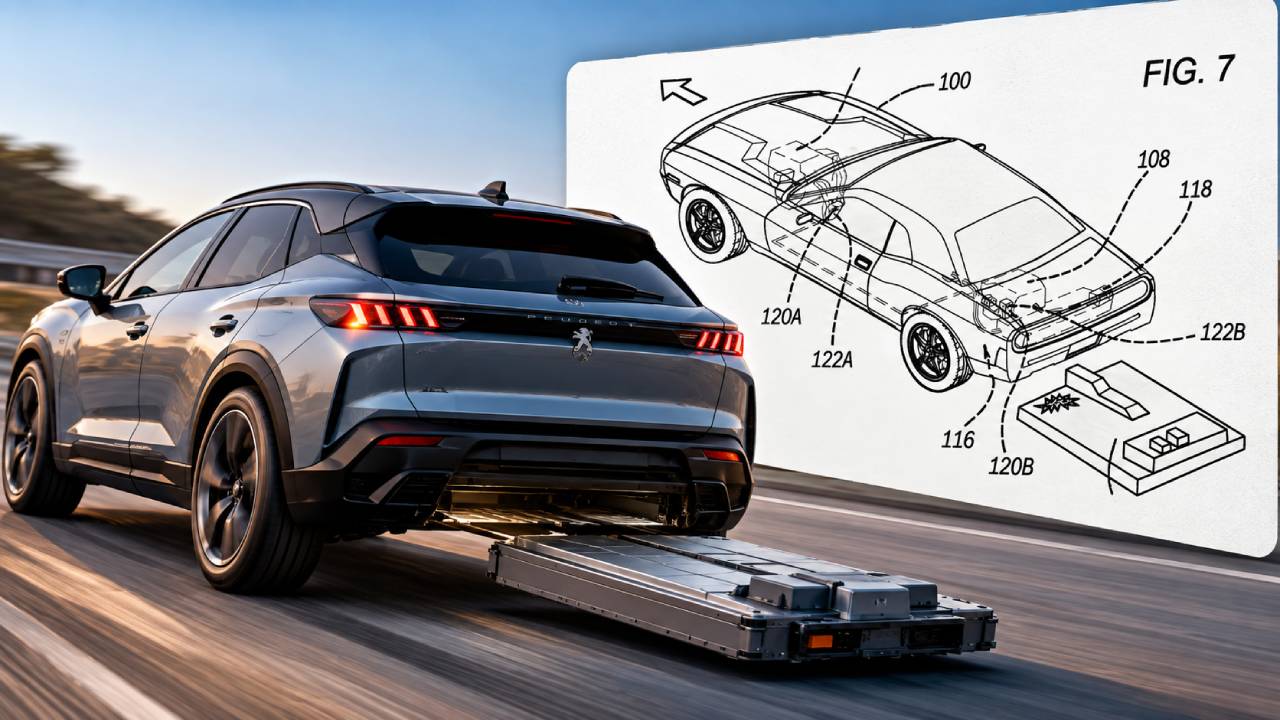
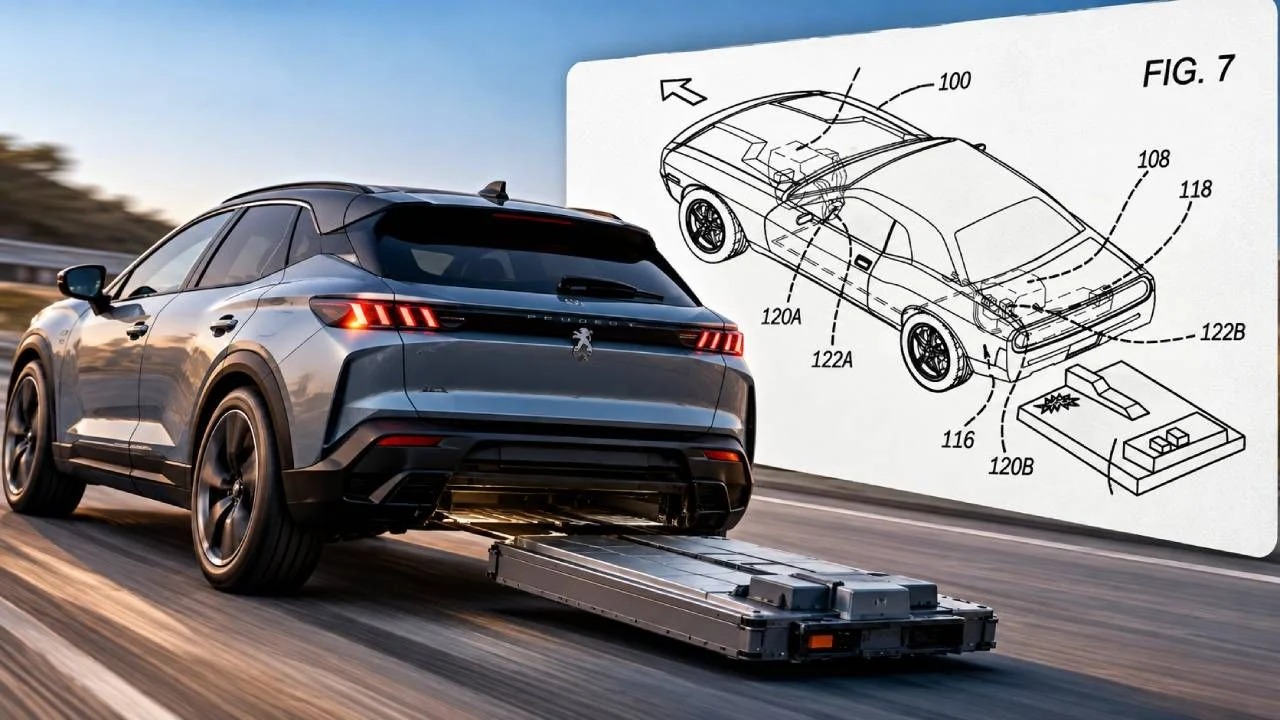
Stellantis has filed a patent for a unique system that can quickly eject an electric vehicle’s high-voltage battery in case it catches fire or overheats. The electric car can then move away powered by its 12-volt battery, keeping the passenger area safe from the danger.
A Battery Release System for Emergencies
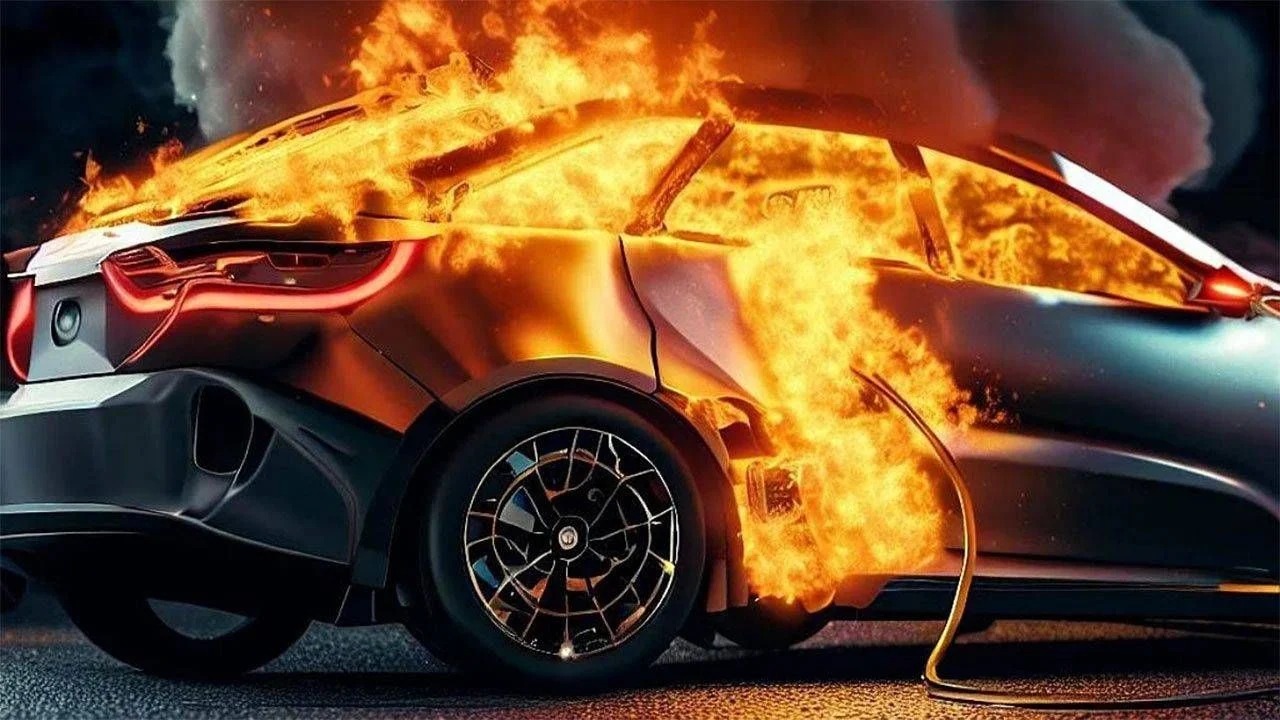
While fires in electric vehicles (EVs) are rare, they can be more dangerous than fires in traditional cars. Stellantis’ new patent, filed in the US, describes a “rapid release system” designed to disconnect both the electrical and physical connection of the main battery during an emergency.
The patent explains that in case of a battery overheating or thermal event, occupants can exit safely. But keeping the battery attached could cause the whole vehicle to be lost. To avoid this, Stellantis proposes ejecting the battery to remove the source of fire from the car.
How the Battery Ejection Works
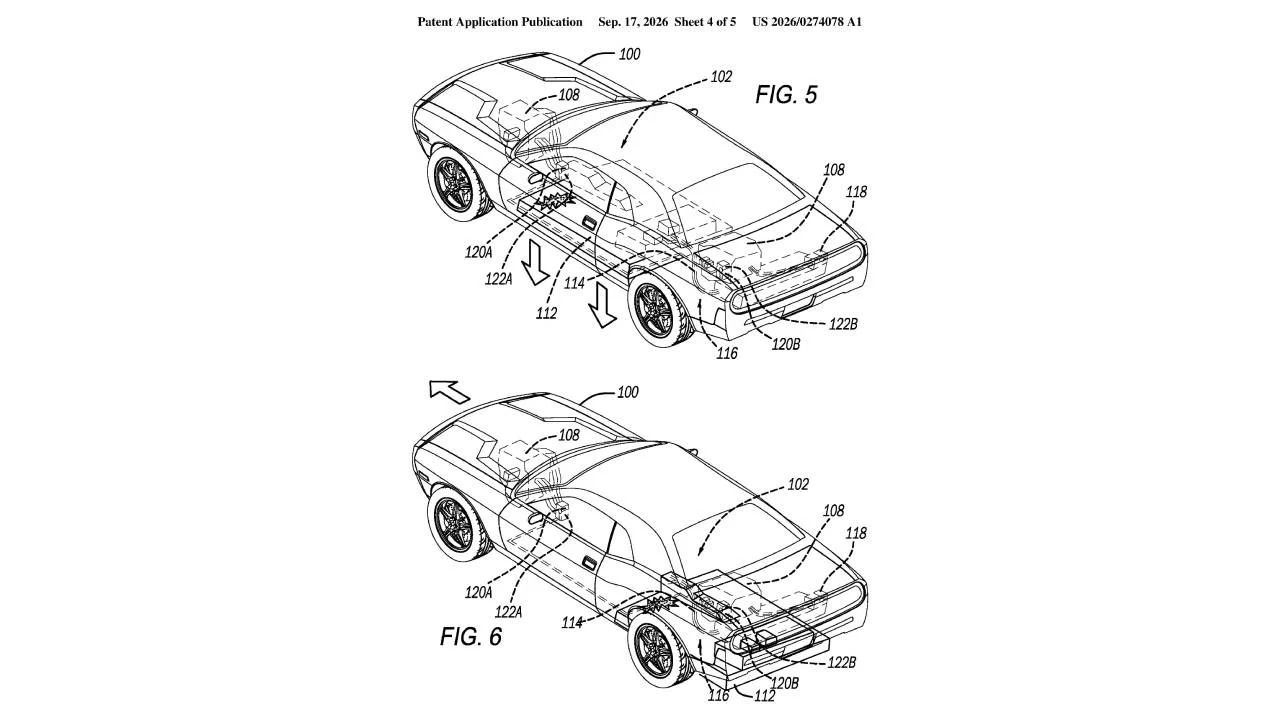
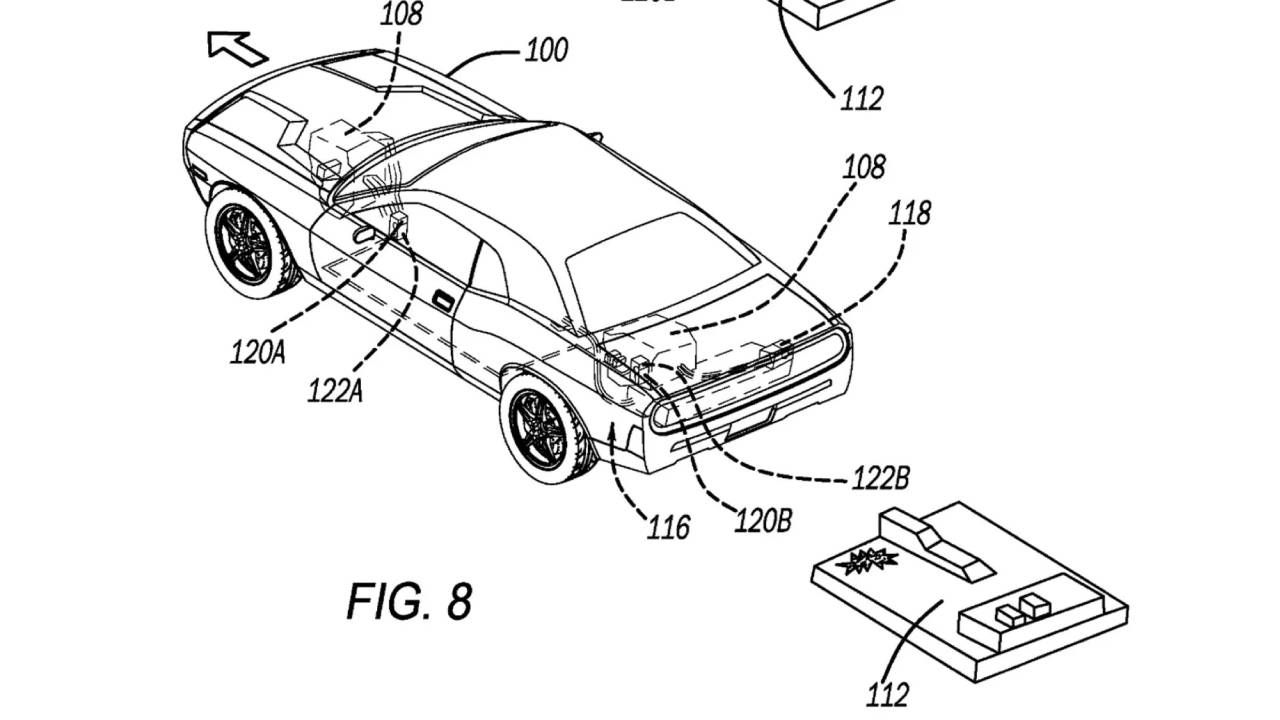
The system may use sliding chassis components or even small pyrotechnic devices—basically controlled explosions—to detach the battery pack. After ejection, the vehicle switches to its low-voltage 12-volt battery to power the motor briefly.
This short burst of power lets the car move a few meters away from the battery pack, which might catch fire after separation. Activating the system requires the driver to trigger a special release button or switch, positioned either inside the cabin or in the trunk. This can be a physical lever, button, or even a touchscreen control.
The patent doesn’t specify how the vehicle handles obstacles when moving away, leaving some questions about its real-world operation.
Similar Technologies from Other Manufacturers
Stellantis’ concept resembles a recent idea seen in a Chinese research project. It also aligns with Tesla’s new “Emergency Drive Away” feature, which allows a vehicle to drive off while still connected to the charger in emergencies. Tesla’s system is already rolling out in the US via software updates.
Tesla warns that using this feature damages both the vehicle and charger, so it is meant only for real emergencies. Stellantis’ system takes a different approach by physically removing the battery and then moving the car away, potentially reducing fire risk inside the vehicle.
This patented technology could become another tool to improve EV safety by limiting fire hazards linked to high-voltage batteries.
Source: motor.es