
Nissan is bringing back the Pixo nameplate, now as a small electric city car closely related to the Renault Twingo and Dacia Spring. Built in Slovenia at Renault’s Novo Mesto plant, the new Pixo aims to offer an affordable EV option priced under €20,000 and designed primarily for urban use.
Shared Platform and Familiar Specs
The Pixo uses the same platform and basic technology as the Renault Twingo and Dacia Spring. It features a 27.5-kWh lithium iron phosphate (LFP) battery that delivers a WLTP range of around 259 kilometers (161 miles). Charging is possible at 50 kW DC, which Nissan says can boost the state of charge from 15% to 80% in approximately 28 minutes. The battery also supports bidirectional charging at 11 kW.
Power comes from an 80-horsepower front electric motor producing 175 Nm of torque. This setup lets the Pixo accelerate from 0 to 100 km/h (62 mph) in about 12 seconds. These modest numbers suit the car’s intended role as a city commuter rather than a performance vehicle.
Design Touches and Practical City Size
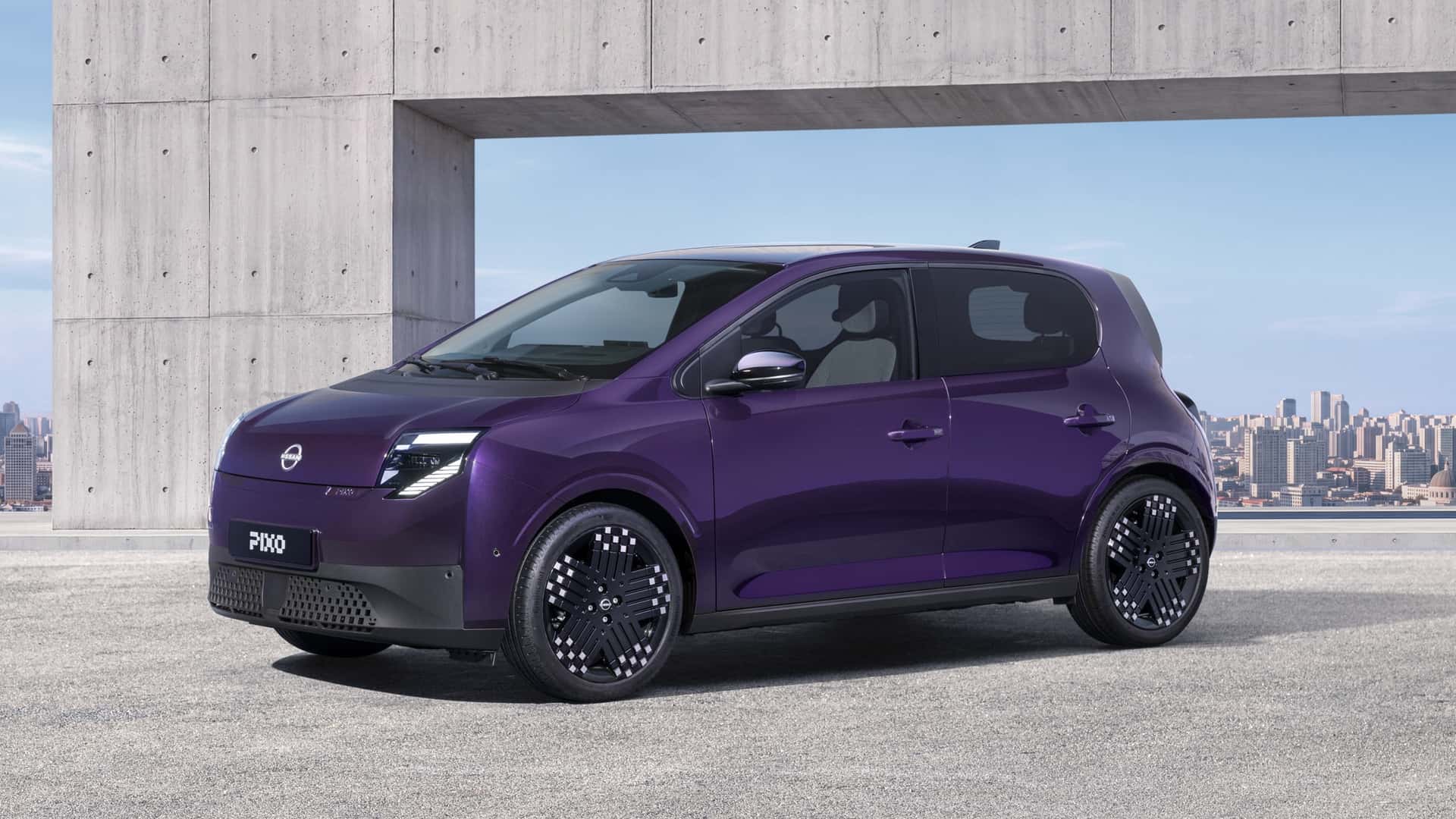
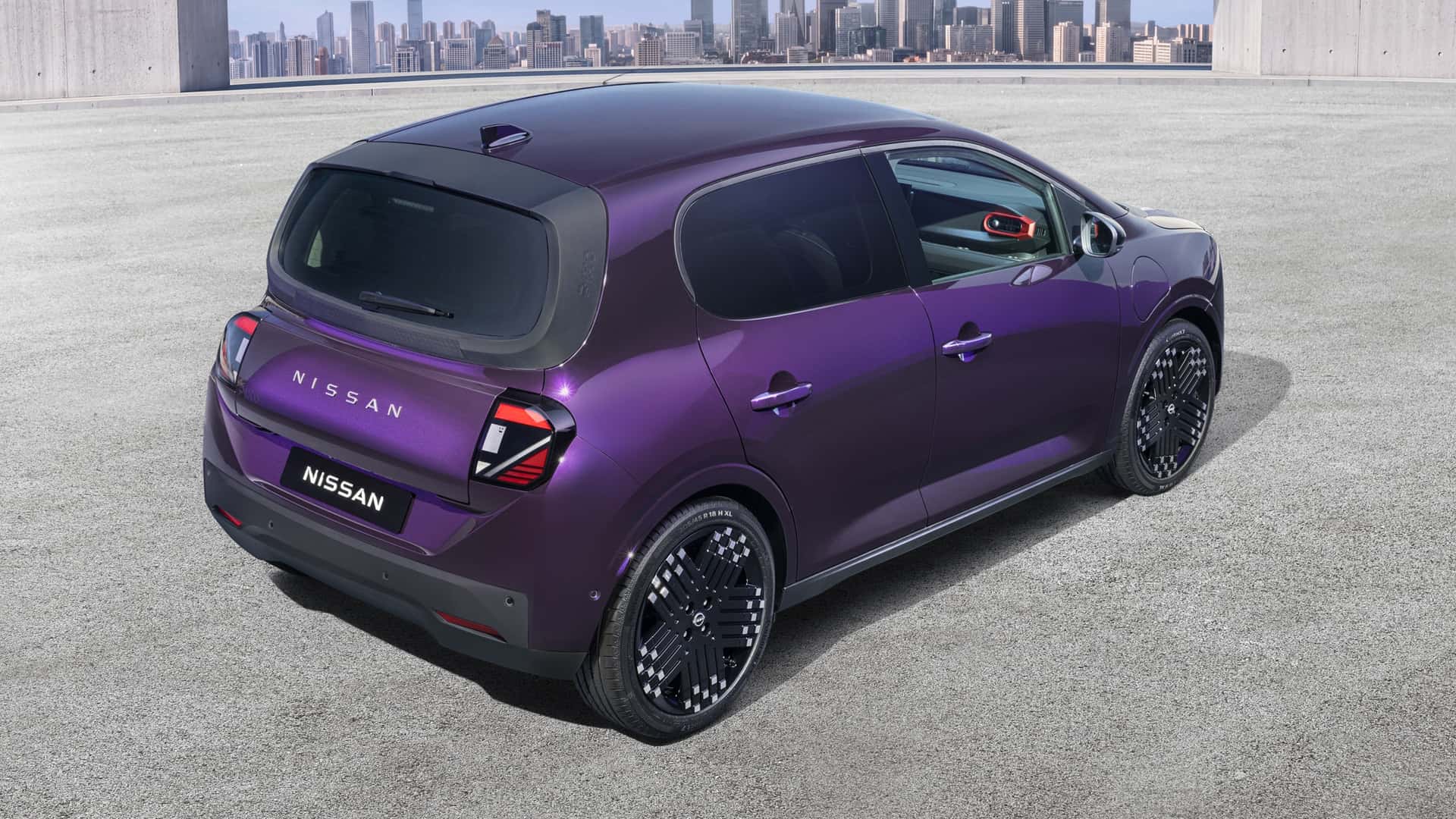
While the Pixo shares much with its Renault and Dacia siblings, Nissan has added unique styling elements, such as pixel-inspired light accents on the front and rear. The overall shape still clearly reflects its French origins but takes a more subdued approach compared to the playful Twingo and boxy Spring. The Pixo measures just under 3.8 meters (149.5 inches) long, with a tight turning circle of 9.9 meters (32.5 feet), ideal for navigating tight city streets.
Interior: A Mix of Classic Controls and Modern Tech
Inside, the Pixo is nearly identical to the Twingo, with a 2,492 mm (98.1 in) wheelbase and reasonable practicality for a city car. It offers 356 liters (12.6 cubic feet) of trunk space behind the rear seats, expanding to 1,221 liters (43.1 cubic feet) when folding the sliding rear seats. Unlike the Dacia Spring, the Pixo does not feature a front trunk.
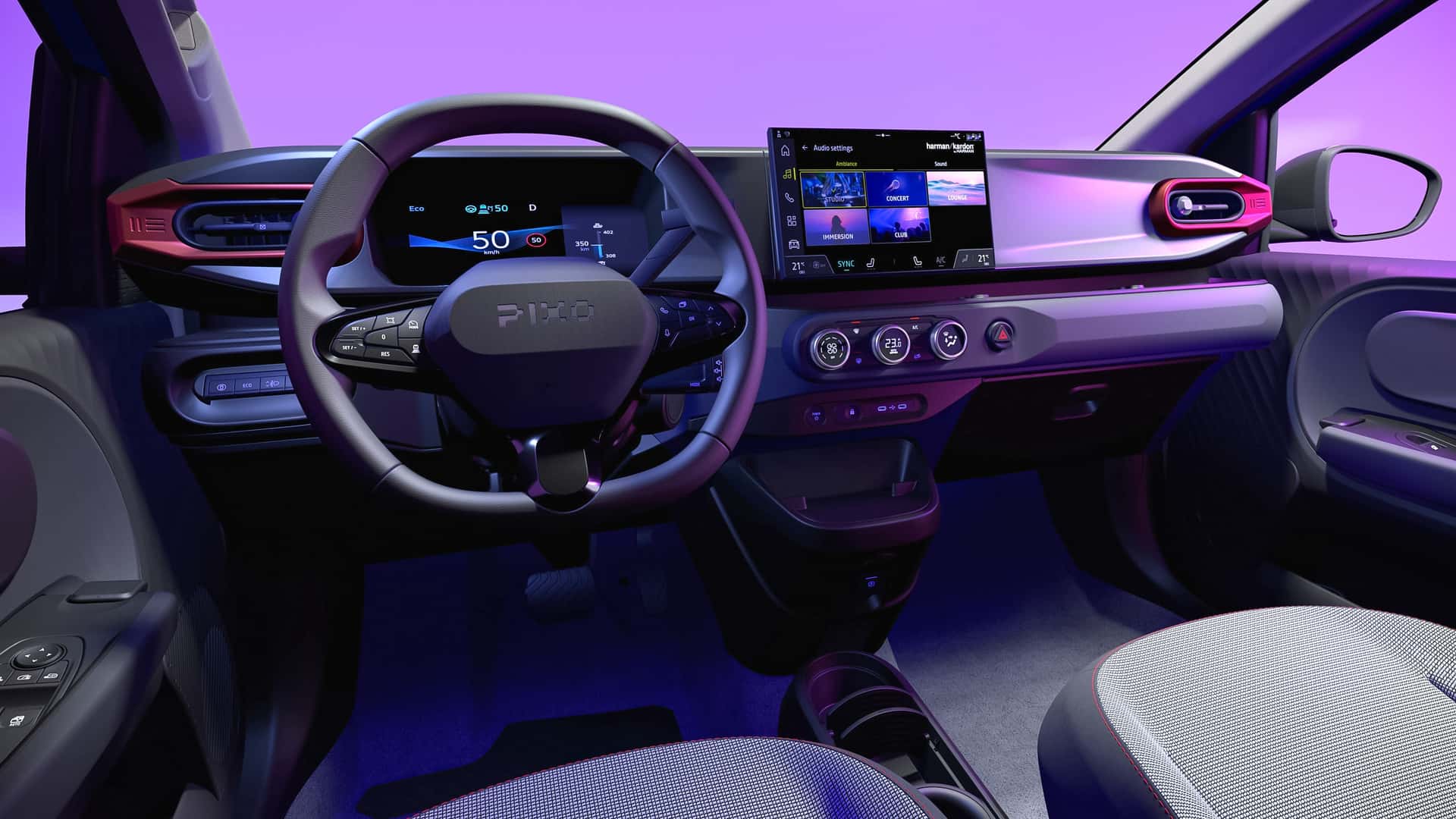
Nissan has opted to retain physical buttons and knobs for many functions, avoiding a full touchscreen interface. Still, the car includes advanced features like Google’s Gemini AI assistant and Face ID for driver recognition and personalized settings, blending simplicity with some smart technology.
European Market Launch Expected Early 2024
Deliveries of the new Nissan Pixo will begin in Europe early next year, with prices expected to be confirmed by December. The entry-level model should come in below €20,000, positioning it as a competitive choice against similar city EVs, such as Volkswagen’s upcoming ID. up! and the relaunched Citroën 2CV. The Pixo’s main strength lies in its straightforward, practical electric city car approach.
A Clear Example of Renault-Nissan Alliance Efficiency
The Pixo showcases how the Renault-Nissan-Mitsubishi alliance leverages shared platforms to offer multiple distinct small electric cars without excessive development costs. Each brand applies its own design language and features to suit different customer tastes while sharing key hardware under the skin. This strategy keeps affordable EVs simple and accessible.
More details about the Pixo’s trims and specifications are expected closer to launch.
Source: motor1.com