
Audi has brought back its A2 nameplate as a fully electric hatchback focused on efficiency. Unlike the original A2 from the early 2000s which broke new ground with an aluminium spaceframe and bold aerodynamics, the new model takes a more practical approach. It uses the Volkswagen Group’s well-known MEB electric platform with a strong focus on achieving high range through refined aerodynamics and efficient components.
Design and Platform Adaptation
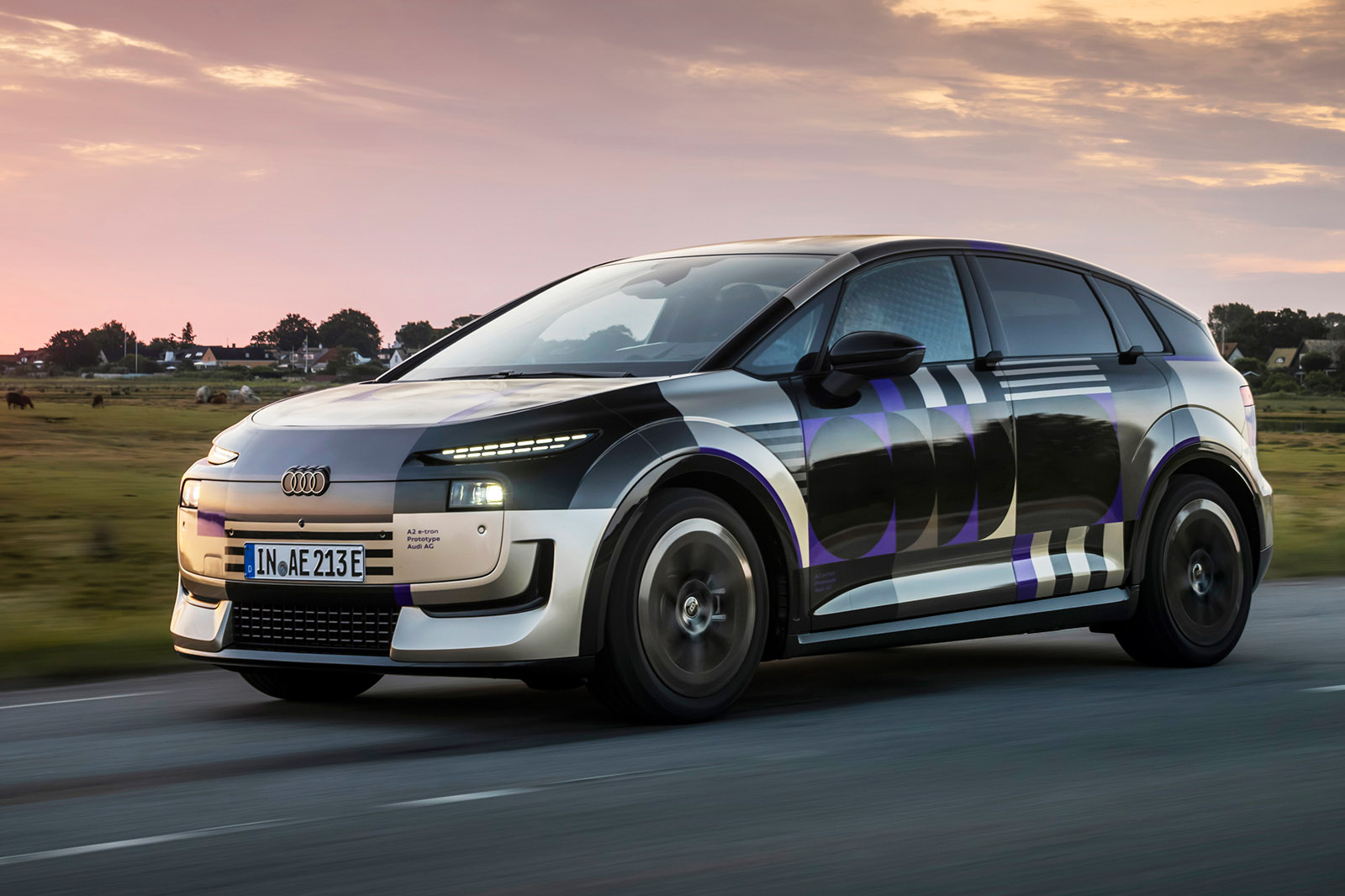
The new Audi A2 E-tron has a compact, aerodynamic shape with a short front end and a flowing roofline that echoes the original’s teardrop form. Instead of radical engineering, the car relies on mass-market underpinnings from the updated MEB platform. Audi hasn’t disclosed official dimensions, but the A2 appears similar in size to the Volkswagen ID.3. This suggests it targets premium compact EV rivals like the Renault Megane E-Tech, Volvo EX30, Mini Countryman Electric, and Cupra Born.
Styling-wise, the A2 avoids flashy retro cues. Instead, it offers a clean, practical design focused on aerodynamic efficiency. The split rear window, reminiscent of the classic model, helps with rear visibility while maintaining the profile needed for drag reduction.
Interior and Technology
The interior shares many features with recent Audi models, particularly the Q3. It features digital displays, a familiar Audi steering wheel, and column stalks inspired by classic 1980s designs. Though the cabin looks solid and functional, it remains quite black and simple rather than lavish. Audi uses knitted-style fabric on the door tops and dashboard, similar to materials used by Mini, adding a tactile element without going overboard.
Seats are manually adjustable cloth units that provide good support, and the driving position feels natural—not too low as a sporty hatchback might be. Rear headroom is generous, but the high floor results in modest knee room. Boot space is expected to be on par with the Cupra Born’s 385 litres.
Battery and Range Focus
A key update is the switch to a lithium-iron-phosphate (LFP) battery in the middle 58kWh pack, replacing the usual nickel-manganese-cobalt (NMC) chemistry. The LFP battery supports being charged to 100% regularly without degradation, aiding long-term usability.
Audi has also introduced a new ‘APP350’ electric motor that improves efficiency by using thinner materials and reducing internal drag through a separate oil pan design. This motor is paired with a sport suspension option that lowers the car for better aerodynamics.
Early test drives in Denmark and southern Sweden with the efficient 58kWh LFP version returned about 5.4 miles per kWh. This equates to roughly 300 miles of range on a full charge, which is impressive for a compact EV. Even with more spirited driving, efficiency near 4.9–5.0 miles per kWh should be possible.
Driving Impressions and Trade-Offs
The test route combined motorways and A-roads, offering a realistic efficiency benchmark. The brake and accelerator pedals are smooth and allow for different driving modes, including freewheeling and one-pedal driving.
However, the sport suspension option tested made for a very firm ride, which could be uncomfortable for everyday driving on typical roads. Audi is likely to offer softer suspension setups in other trims.
The Bridgestone Turanza 6 tyres generated noticeable road noise and their wet grip remains unproven, although the specific Audi variants may perform differently from other models tested previously with the same rubber.
Thanks to a rear-mounted motor, steering felt balanced and precise, with no disturbance from torque steer.
Positioning and Outlook
The new A2 isn’t a niche, experimental car like its predecessor but a more practical electric hatchback aimed at buyers who want efficiency and Audi styling in a small package. It indirectly replaces the A1 and Q2 in the lineup.
Although it shares much with the Volkswagen ID.3 beneath, the A2 manages to feel distinct through its aerodynamic body and Audi-specific interior touches. The focus on efficiency with upgraded battery chemistry and motor technology is the car’s highlight.
More details on dimensions, pricing, and other battery options (likely a smaller 52kWh and larger 79kWh pack) should come closer to launch, which is expected later this year in the UK and other markets.
Source: autocar.co.uk